NEIL YOUNG
‘I don’t care if it’s out of tune’: Neil Young’s Tonight’s the Night in the age of machines
In an era of confected studio production, Neil Young recorded Tonight’s the Night, one of the rawest and most desolate albums ever made. David Rea explores the live recording philosophy behind the masterpiece and how it might soon be seen as the AI revolution takes hold.
Photo: Gijsbert Hanekroot / Alamy
12 June 2026
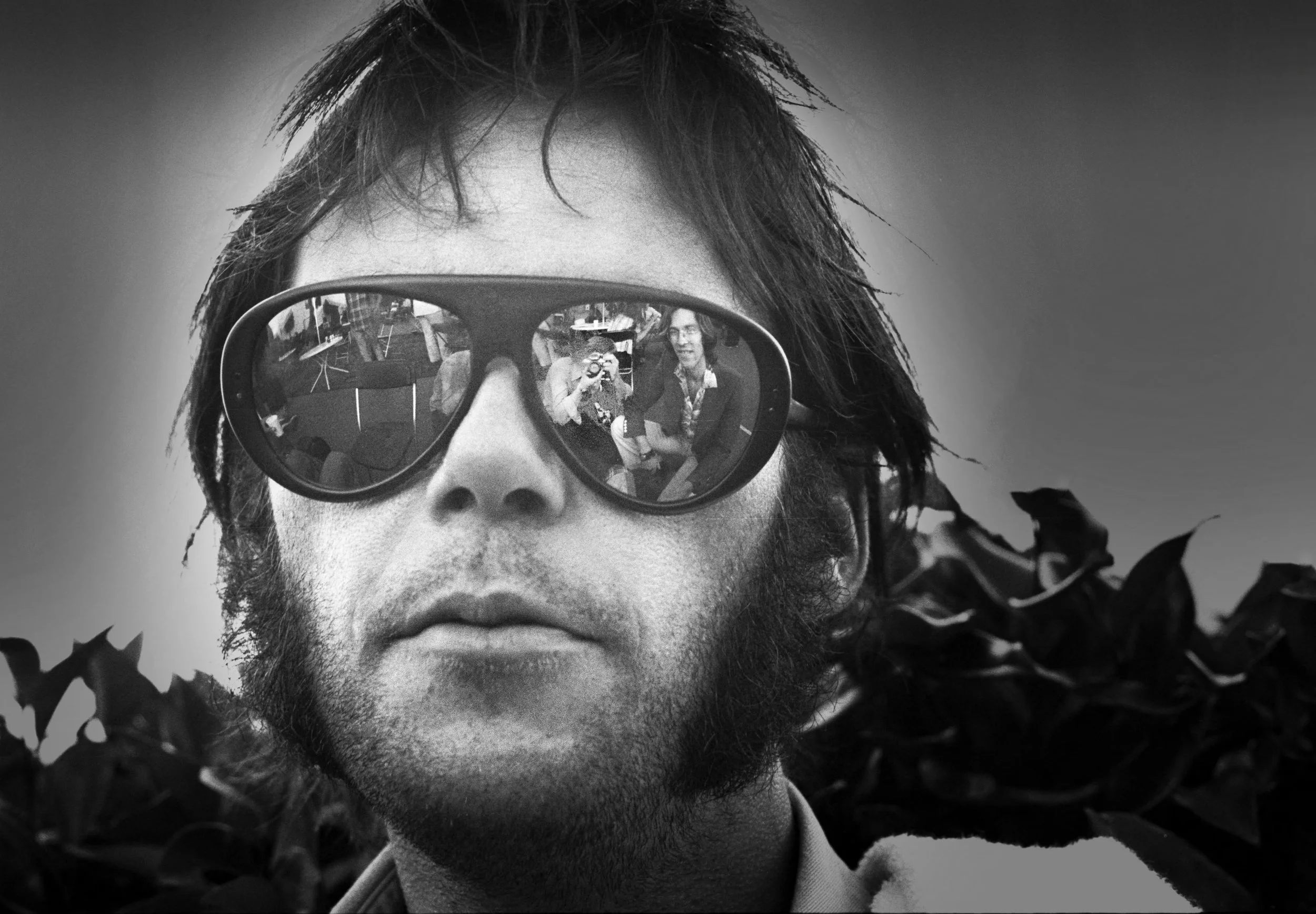
Neil Young backstage at Oakland Stadium, California, July 14 1974
‘I ALWAYS THINK OF BEING FIVE OR SIX,’ Neil Young told Mojo in 1995, ‘…on my way to school every day with my little transistor radio up to my ear.’ The vignette evokes a bygone world of teenagers listening to rock 'n' roll 45s in their bedrooms and jiving in jukebox-furnished diners. It was a postwar youth culture birthed and disseminated by rapidly advancing technology, from studios recording with magnetic tape to adolescents listening to handheld transistor radios.
As technology has continued to drive pop music’s evolution over the eight decades since then, our music tastes have adjusted. The rock 'n' roll which came from boomers’ bedrooms sounded so wild and dangerous in the 1950s it succeeded in spreading moral panic. For Gen Z and Gen Alpha, whose ears are often calibrated to autotune, time correction software and streaming, those same recordings sound ragged and tinny — as harmless and old-fashioned as a Victorian music box. Technology, music and our sensibilities have developed hand-in-hand. But now we are beginning an AI revolution, will those causal links be broken? As machines deliver an ever-more frictionless musical product, are we going to start to crave its opposite: music wrought with raw human authenticity?
The 1950s and 1960s revolution in recording technology, which introduced multi-tracking, stereo panning, guitar effects pedals and the rest, didn't carry all artists along with it. As psychedelic studio experimentation accelerated via the likes of the Beatles, Jimi Hendrix and Pink Floyd, in 1967 Bob Dylan released the stripped-back John Wesley Harding and Leonard Cohen his even sparser debut, Songs of Leonard Cohen. Over the next two years, Joni Mitchell put out Song to a Seagull and Bob Dylan the country album Nashville Skyline. Meanwhile, bands plugged in and searched for a raw live sound. Neil Young made Everybody Knows This Is Nowhere with garage rockers Crazy Horse in 1969, and the Stooges only used overdubs and multitracking sparingly on proto-punk classic Fun House. By the end of the decade even The Beatles set out to make a back-to-basics record in what became Let It Be.
For Neil Young the key was in recording everything he did: ‘For years I wouldn’t play unless the tape was running. I just recorded everything—all the tours, everything.’
Looking back at the vogue for highly produced records of the 1970s, Neil Young said, ‘It wasn’t about music. It wasn’t about performing. Slick. Many overdubs. Cleanest, dinkiest, pissantiest-sounding records that could possibly be made … I hated that shit.’ He elaborated, 'I don’t worry about the permanence of the record. That’s what’s good about it. You make it, you got it, that one’s too late to change, you do another one.’
Young’s philosophy tapped into a broader movement across the postwar arts, which explored the creative potential of spontaneity and improvisation. In 1947 Jackson Pollock laid a canvas on the floor and dripped paint on it, letting the paint fall where it may and allowing for a happenstance accumulation of abstract forms. In 1964 Frank O'Hara published Lunch Poems in which he describes the moment-by-moment experience of walking through New York. When Jack Kerouac wrote the first draft of On the Road in April 1951, he did so in a single paragraph of 170,000 words, completed in twenty days. In his album notes for Miles Davis’ Kind of Blue of 1959, Bill Evans compared jazz to an unidentified Japanese art form, ‘… in which the artist is forced to be spontaneous. He must paint on a thin stretched parchment with a special brush and black water paint in such a way that an unnatural or interrupted stroke will destroy the line or break through the parchment. Erasures or changes are impossible.’ A brushstroke (or note on a trumpet or guitar) can, equally, never be precisely replicated. One vocal take will never have the same tone or emotion as the next. Each is a unique moment of human expression.
For Neil Young the key was in recording everything he did: ‘For years I wouldn’t play unless the tape was running. I just recorded everything—all the tours, everything. Make it so there’s no difference between playing and recording—it’s all one thing.’ He continued, describing a Zen-like state in which he let go of conscious control. ‘Then you forget you’re recording, ’cause ultimately the music gets in your face, you forget what you’re doing, and all of a sudden you realize, “Jesus, we recorded that”.’ When he made Tonight’s the Night, Neil Young took the philosophy to a new level.
STATE OF SOUND
Your Backstage Pass to Music History
Founded & Edited by David Rea
State of Sound provides the best in-depth coverage of music history. Travel back in time to groundbreaking eras and scenes. Get closer to iconic music and the trailblazers who made it. Claim your backstage pass to music history now by signing up for our free newsletter.
Sign up for our free newsletter, Get exclusive content
Get all the latest from State of Sound delivered straight to your inbox. Only newsletter subscribers receive our Muso Playlists and Hidden Classic recommendations.
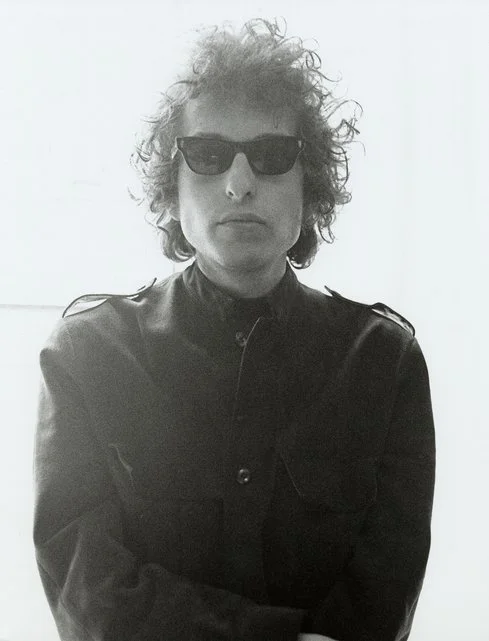
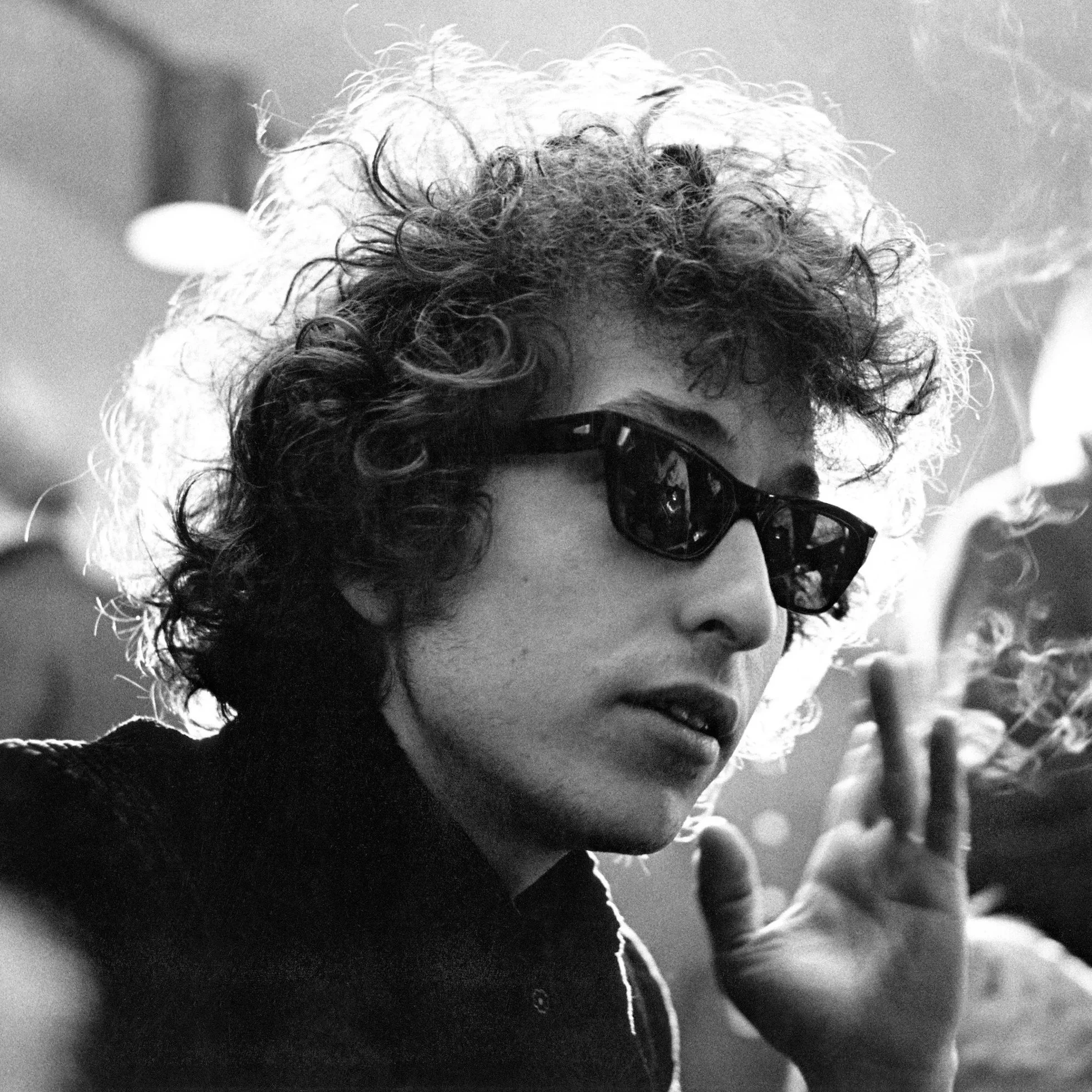
Photo: Bob Dylan; credit: Pictorial Press Ltd / Alamy
The recording sessions for Tonight’s the Night took place in a rehearsal hall, converted into a makeshift studio: a mobile recording lorry was parked in an alleyway, a hole sledgehammered through a wall (the hole is visible in the album’s back cover photo) and cables run into a small locker space which became the control room. Following the drug overdoses of Crazy Horse’s guitarist Danny Whitten and roadie Bruce Berry, the atmosphere was tense. ‘The mood was hangin’ in the air,’ said Nils Lofgren, who played on the album, ‘you could cut it with a knife’. Despite recording indoors at night, the band wore sunglasses. Joel Bernstein, responsible for taking visa photographs of the band at the time described the bacchanalian scene: ‘It was like doing a documentary on nocturnal animals pulled out from under a rock. They looked like little rodents when you shine a light in their eyes.’ ‘We’d get really high,’ Neil Young told Bud Scoppa in 1975, ‘drink a lot of tequila, get right out on the edge, where we knew we were so screwed up that we could easily just fall on our faces. … We were wide open … just wide open ….’
Neil Young had recorded live in the studio before, but on this occasion he forwent rehearsals. Lofgren struggled with the extreme approach. 'Just as we were learnin’ a new song and trying to sing at the same time, he’d be rollin’ tape, lookin’ for a final take. It freaked us all out.’ ‘I don’t care if it’s out of tune, man,’ Neil Young ranted at one point between takes, audible on the two-track masters, ‘let’s just play. Fuck it. … Cut that, will ya, that ‘Fuck it’? Just cut it right out so it doesn’t offend anybody, the ‘fuck it’ … from the top of the ‘f’ to the bottom of the ’t.’’.
Tonight’s the Night was released in June 1975. Flying high in the UK album chart in the same month were Kraftwerk’s Autobahn and The Carpenters’ New Horizons and, in the US, Wings’ Venus and Mars. What must Tonight’s the Night have sounded like beside those recordings? In a glowing review in Rolling Stone in 1975, Dave Marsh wrote: ‘The music has a feeling of offhand, first-take crudity matched recently only by [Bob Dylan’s] Blood on the Tracks, almost as though Young wanted us to miss its ultimate majesty in order to emphasize its ragged edge of desolation’. The album didn't sell well.
In 2023 Rolling Stone ranked it at 302 in its list of The 500 Greatest Albums of all Time. Many Neil Young fans would rank it amongst his very best. Equal to the extraordinary songs is the album’s raw, dark and very real feeling. Tonight’s the Night is a time capsule preserving a complex mood in a dark and empty room at a emotionally devastating time, a never-to-be-repeated confluence of artist, musicians and circumstances — everyone grieving, everyone wasted, everyone ‘wide open’.
How might the album sound a century from now, or even a millennium? Unlike the relatively small tech advances since a five- or six-year-old Neil Young held a transistor radio to his ear, the AI revolution is already radically transforming our sensibilities. Once indicators of carelessness, typos now suggest an almost reassuring human presence behind an email or website, and not a bot. Should AI push it out, then human-made music’s fine-grained feeling — exemplified by Neil Young’s drunken, midnight voice on Tonight’s the Night — will become an increasingly rare and precious commodity. In 1000 years (if we are still here) the album will no doubt sound to some like an old rusty piece of junk, an anachronistic example of 20th century music; but to others it will sound like an awe-inspiring museum piece of heartbreakingly imperfect human expression.
© 2026 State of Sound. All Rights Reserved.
David Rea
David Rea is a journalist who writes about the intersection of music, culture and history. He is the founder and editor-in-chief of State of Sound. His fiction has recently been featured in Oyster River Pages and Catamaran Literary Reader, and long-listed for the Commonwealth Short Story Prize. He is currently writing a history of British popular music and a historical novel set in the USSR and Hollywood during the interwar period. He lives just outside London with his wife and two sons.
Photo: Arthur McLachlan Rea