HOW THEY WROTE THE SONG
‘Places were being decimated’: How The Jam wrote Town Called Malice
By David Rea
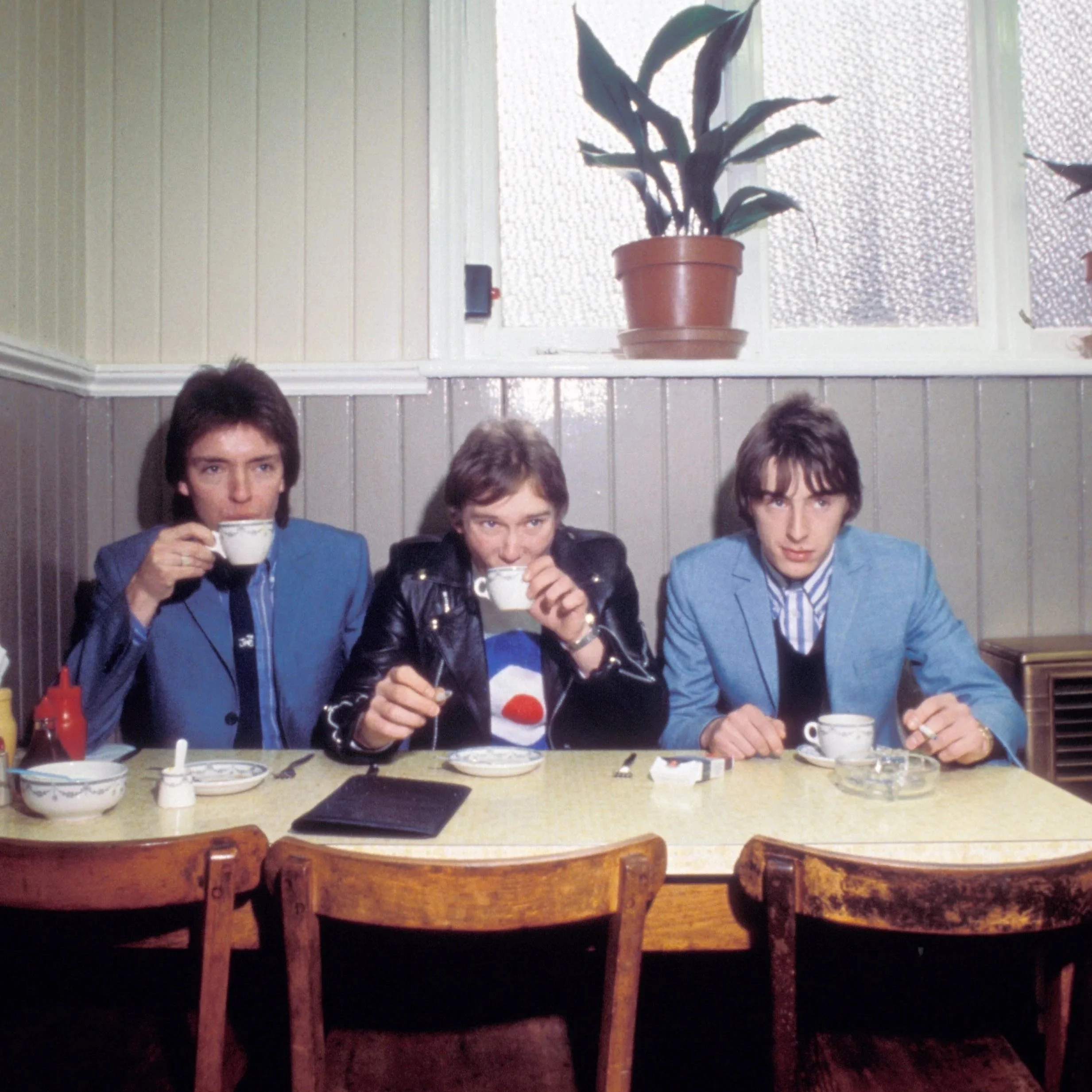
Photo: Pictorial Press Ltd / Alamy
31 January 2026
PERHAPS IT BEGAN HERE: The Jam hitting that famous Motown groove during an improvisation session, twirls of cigarette smoke rising from ashtrays, smiles appearing on lips. Or perhaps here: Paul Weller as a little kid walking past his hometown’s dairy yard, or in bed at night hearing trains shunting about at the nearby railway station: sense memories which would percolate for years. Or here, even further back, in the kitchen-sink realism of late 1950s and early 1960s Britain, which gave birth to John Osborne’s Look Back in Anger and Shelagh Delaney's A Taste of Honey.
That world of alienated anti-heroes, trapped in poverty under dishwater-grey northern skies, seeped into British songwriters’ imaginations in the 1960s and beyond. Trace elements can be felt in the Kinks’ ‘Dead End Street’, the Animals’ ‘We Gotta Get Out of This Place’, the Beatles’ ‘She’s Leaving Home’, the Rolling Stones’ ‘Mother’s Little Helper’, Small Faces’ ‘Lazy Sunday’, Squeeze’s ‘Up the Junction’, the Specials’ ‘Too Much Too Young’ and the Smiths’ ‘This Charming Man’. Add to that list The Jam’s ‘To Be Someone’, ‘That’s Entertainment’ and, perhaps their greatest song, ‘Town Called Malice’.
Paul Weller's upbringing had more than a little to do with kitchen-sink realism. He was squarely working-class — his father a taxi driver and mother a cleaner — and grew up in a modest Victorian terrace with an outside toilet and no hot water. The family lived in Woking, a banal commuter town concreted over by 1960s town planning, where shouts and revving car engines echoed off graffitied walls. It was fertile ground for youth culture. As a quintessential angry young man, dressed up in Mod’s Sta-prest trousers, Ben Sherman shirts and parkas, we can imagine Weller riding on buses, standing to the side to watch a gang of skinheads run past, their boots rumbling on the sun-baked pavement.
“In the end, Paul Weller subverted the fate of the trapped antiheroes of kitchen-sink realism, breaking away from his working-class origins to find huge success.”
When Weller penned ‘Town Called Malice’, Britain was undergoing Margaret Thatcher’s political revolution. As manufacturing industries went into terminal decline, inner cities died and unemployment soared, kitchen-sink drama’s closed-in world of working-class struggle no longer felt like a closed chapter in British post-war history. ‘I was taking note of what was going on in the country,’ Weller told The Guardian in 2012. ‘When you're touring, you're often in your own bubble, but we were going around the country seeing first-hand what was happening. It was the start of the hardline Margaret Thatcher years, and places – up north, especially – were being decimated.’ Weller transformed what he witnessed through the tour bus window, combining it with childhood memories, and created the most original images of his career: the ‘ghost of a steam train’, milk floats ‘dying in a dairy yard’, housewives hanging ‘old love letters’ on the washing line.
Weller once remarked there was a contradiction between the music’s uplifting rhythmic drive and the lyric’s hard realism. But therein lies the alchemy of ‘Town Called Malice’. Motown’s soulful optimism gives Weller's anger and frustration a human heartbeat and a trace of hope. ‘It's up to us to change,’ he sings at the end of the first verse, ‘this town called Malice.’ It's a line which draws something from punk’s DIY spirit. Ironically, it also inadvertently channels Margaret Thatcher’s ethos of self-reliance.
‘Town Called Malice’ was The Jam’s third No. 1 in the UK, remaining at the top for three weeks. Paul Weller ranks it amongst his best, an idea borne out by its enduring popularity. At the time of writing, it has more than 200 million streams on Spotify alone.
In the end, Paul Weller subverted the fate of the trapped antiheroes of kitchen-sink realism, breaking away from his working-class origins to find huge success. But he owed a debt to that world, which inspired one of his greatest songs: a Motown-propelled, kitchen-sink poem to the kind of places Margaret Thatcher left behind.
Bibliography
Reed, John. ‘Paul Weller: My Ever-Changing Moods’ (Omnibus Press, 2009)
Hewitt, Paolo. ‘Paul Weller: The Changing Man’ (Corgi, 2008)
© 2026 State of Sound. All Rights Reserved
RELATED
ESSAY
20 September 2025