‘Please Please Me’: How the Beatles sang about sex and got away with it
The Beatles could only break America by conforming to its prudish sexual attitudes. But did Lennon and McCartney have the last laugh?
by David Rea
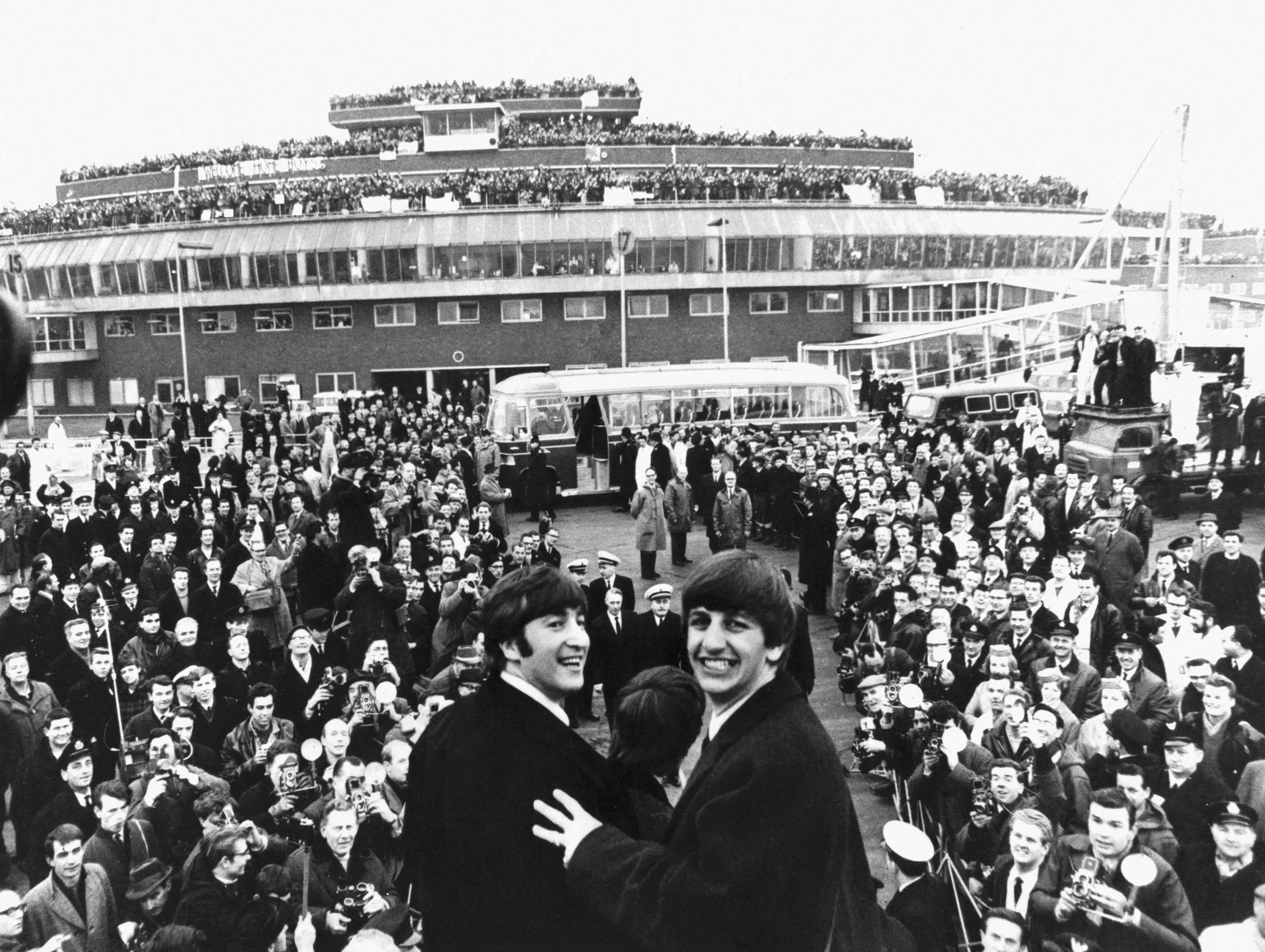
Photograph: Photo 12 / Alamy
28 February, 2026
ESSAY
'Get your knickers down!'
John Lennon speaking to the audience at a Beatles' concert, Litherland Town Hall, Liverpool, 1960
Interviewer: 'Have you ever thought about coming to Sweden?'
Paul McCartney: 'Actually, we want to come because we've heard about the girls in Sweden. All gorgous blondes, you know.'
Interview with Klas Burling, 1963
'For the people in the cheaper seats, clap your hands. And the rest of you, if you'd just rattle your jewellery.'
John Lennon speaking to the audience at the Royal Variety Performance, 1963
AT GREY AND STILTED British press conferences in the early 1960s, the Beatles' wit, irreverence and collective charisma generated plenty of sparks. They showed little deference to journalists supposed to be their social superiors. Gambolling, quipping, drinking and even occasionally swearing in public, the Beatles pushed against Britain's rigid class structures and creaking social norms with their absurdist and sometimes bawdy humour. Nobody seemed to mind. It was part of the Fab Four's charm. At the 1963 Royal Variety Performance, when John Lennon said the rich in the audience could rattle their jewellery instead of clapping, even the Queen Mother smiled.
The Beatles' extraordinary connection with every stratum of British society was grounded in their apparent authenticity. Their working-class cheek, shiny-eyed exuberance and sweet, self-penned songs seemed to run through their core like 'Kiss Me Quick' through a piece of seaside rock. Few who listened to the words of 'All My Loving' ('close your eyes and I'll kiss you') could doubt their sincerity. The Beatles’ lyrics' bright innocence was of a piece with their luminous, ever-smiling personas.
The truth of course was more complex. 'Sexual intercourse began / In nineteen sixty-three,' English poet Philip Larkin facetiously wrote, 'Between the end of the Chatterley ban / And the Beatles' first LP'. But people had been bonking away in Britain since time immemorial, and the Beatles had been at it for several years before their first LP. When they arrived in Hamburg in the late summer of 1960, drawing up in the St Pauli district in a van, John Lennon was 19 years old, Paul McCartney 18 and George Harrison 17 (Ringo had yet to join). None of them had been abroad before. A tableau of flashing neon, roiling with transvestites and sex workers, soldiers and sailors, greeted the band. They were shown their new place of work, a dilapidated strip club called the Indra, and their living quarters, a cramped storeroom behind a cinema screen, which played old westerns and porn films.
As their popularity grew, women reached up to the stage to grope the Beatles' legs, signalling they wished to sleep with them; others turned up unannounced at the storeroom for a quick late night romp in the dark. Dispensing with the rituals of teenage courtship, George Harrison lost his virginity in Hamburg in the presence of his bandmates, who applauded his performance afterwards. According to Allan Williams, a booking agent who added 'pox doctor' to his resume in Hamburg, the Beatles would come to him complaining of a 'sore prick'; he would have them piss into a glass to make an initial diagnosis and then send them off to a clinic. 'A lot of people say the Beatles were created (at The Cavern Club) in Matthew Street, which wasn't true,' said Williams. 'They were created in Hamburg.'
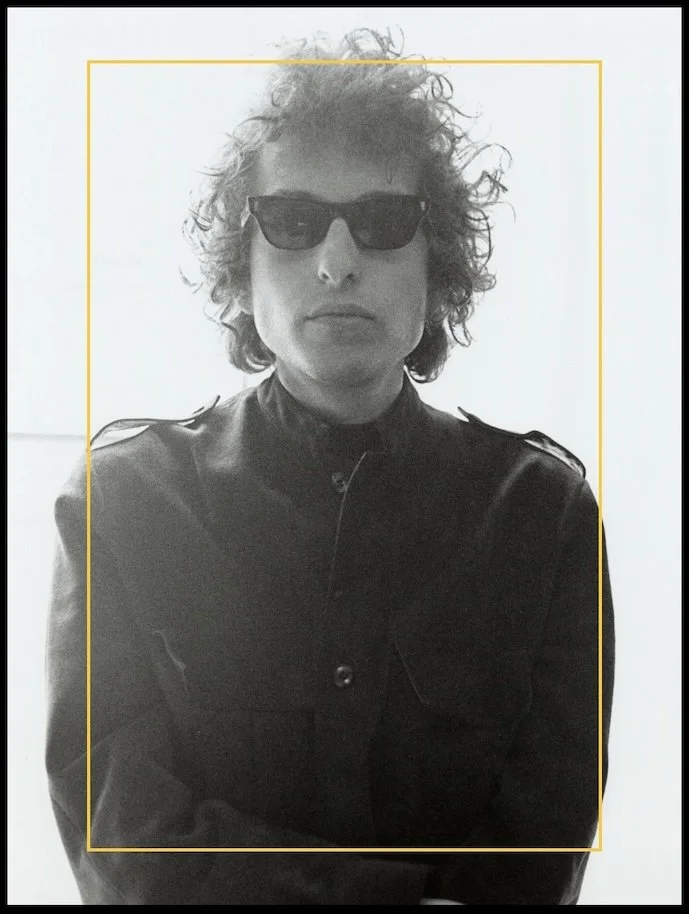
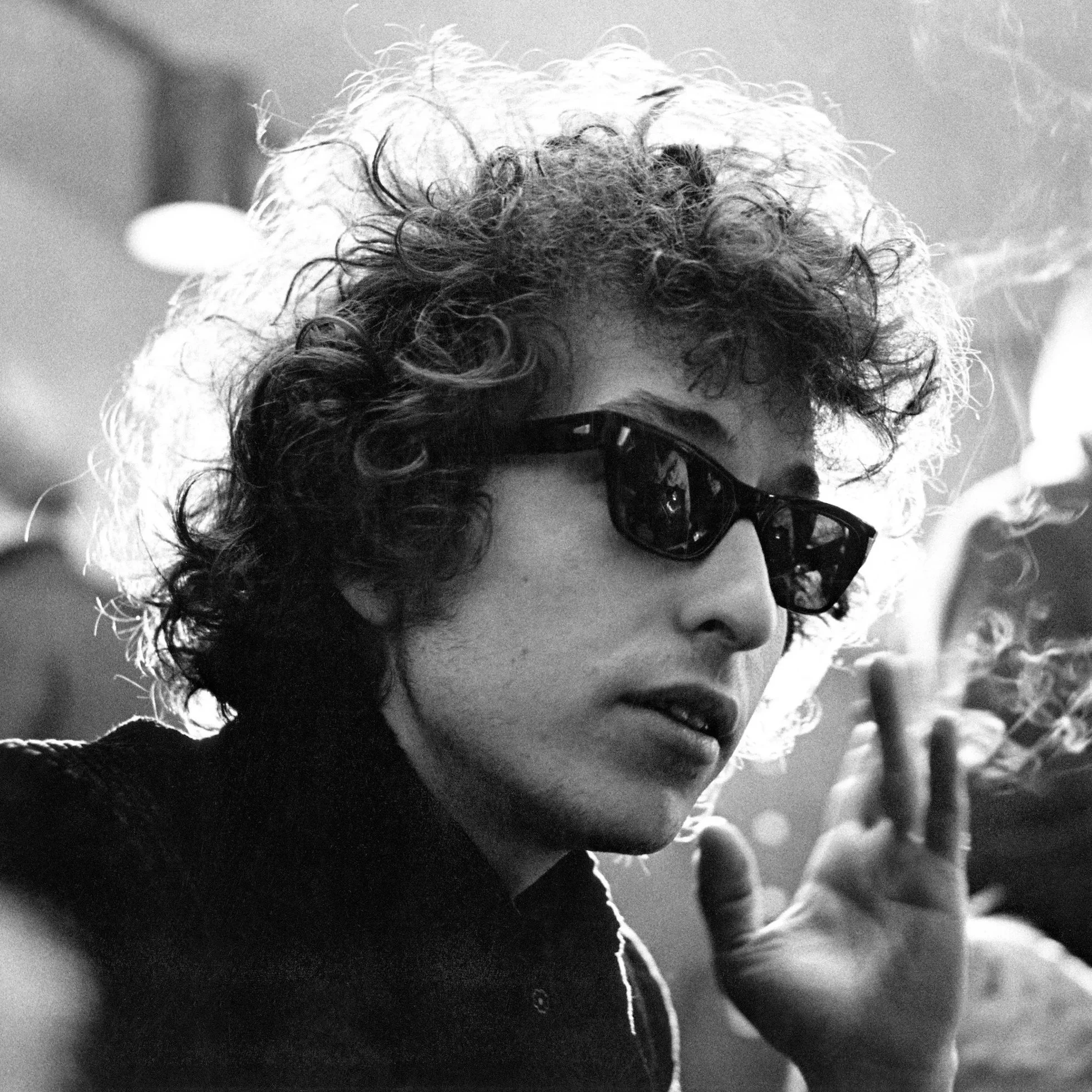
Photo: Bob Dylan; credit: Pictorial Press Ltd / Alamy
The Beatles grew up in a morally conservative Britain brimming with the ribaldry and sexual innuendo of music hall entertainment, saucy seaside postcards and the Carry On films.
Their sexually liberated (and apparently formative) lifestyles in Hamburg were a long way from the innocent teenage concerns of their early songs. Rock 'n' roll, with its irreverence and sexual energy, had been much closer to their hearts. The name itself was a euphemism for sex, and Elvis Presley's swinging hips and snarling top lip had spread moral panic across America. But rock 'n' roll's first wave soon passed. Chuck Berry and Jerry Lee Lewis ran into legal trouble, Elvis had a buzzcut and dutifully completed his military service, and the artist who had once sang about anal sex, Little Richard, renounced rock 'n' roll as the devil's music.
At the beginning of 1961, with characteristically voracious musical appetites, the Beatles began to imbibe the R&B and Motown of Black America, attracted in all likelihood by the music's direct musical attack and raw emotion, rather than its saccharine lyrics; like the Beach Boys, the Everly Brothers, and Cliff Richard, these explored the joys and tribulations of young love.
And so, with their rock 'n' roll heroes gone and teenagers lining up to buy 45s about infatuation and heartbreak, Lennon and McCartney penned songs in the same vein. It spotlighted a friction between their natural rock 'n' roll spirit and preternatural ambition to succeed. Having been set a punishing songwriting schedule by George Martin, which stipulated a new single every three months and a new album every six, Lennon and McCartney were more than ready to play the game, follow orders and meet deadlines – anything to maximise their chart-topping potential. Exhibiting an eye-watering level of professional speed, the songwriting duo delivered 'From Me to You' from creative spark to master tape within the space of a week.
But on a few of their early songs, they found a way to achieve success and hang on to a trace of their rebellious spirit, using a particular brand of British comedy. The Beatles grew up in a morally conservative Britain brimming with the ribaldry and sexual innuendo of music hall entertainment, saucy seaside postcards and the Carry On films. John Lennon in particular had been an avid fan of The Goon Show, which exemplified the bait-and-switch sexual innuendo common at the time — A: 'I have a very large organ.' B: 'Indeed?' A: 'Yes — in the church!'
Was the line 'and when I touch you / I feel happy inside' still talking about touching hands? And isn't there a joke hiding at the heart of the song?
These influences could be heard on 'Please Please Me', whose second 'please' suggested sexual pleasuring. 'Please please me oh yeah like I please you' could be translated without much effort into 'I give you cunnilingus so please reciprocate with fellatio'. 'I Saw her Standing There' has a line straight out of some bawdy anecdote, the kind that might be accompanied by a knowing nudge: 'Well, she was just seventeen / You know what I mean'.
The greatest distance between the content of the Beatles' early lyrics and the content of their likely filthy minds is on 'I Want to Hold Your Hand'. Despite No. 1 singles in the UK, the Fab Four initially failed to make a dent in the US chart. George Martin had presented Capitol Records with songs only to be told they were unsuitable for the US market. Brian Epstein implored Lennon and McCartney to write songs for America. The result, 'I Want to Hold Your Hand', showed a calculated awareness of the extreme sexual conservatism of America at the time, providing the Beatles with wide-ranging access to the country's airwaves, jukeboxes and teenage market.
But even here, there were hints of sexual suggestion. Was the line 'and when I touch you / I feel happy inside' still talking about touching hands? And isn't there a joke hiding at the heart of the song? Remove the melody, and the opening lines sound like the set up for a saucy gag, building to a filthy punchline: 'Oh yeah, I'll tell you something (nudge nudge) / I think you'll understand (wink wink) / Then I'll say that something' only for it to be comically subverted, substituted with the sweetly bashful: 'I want to hold your hand'.
Under pressure to crack the biggest music market in the world, we can picture Paul McCartney and John Lennon — haggard, guitars in hand, facing one another — writing the lyrics and smirking at hidebound America. Perhaps, rather than compromising to make their greatest commercial breakthrough, they found a way to be themselves.
© 2026 State of Sound. All Rights Reserved
David Rea
David Rea is a journalist who writes about the intersection of music, culture and history. He is the founder and editor-in-chief of State of Sound. His fiction has recently been featured in Oyster River Pages and Catamaran Literary Reader, and long-listed for the Commonwealth Short Story Prize. He is currently writing a history of British popular music and a historical novel set in the USSR and Hollywood during the interwar period. He lives just outside London with his wife and two sons.
Photo: Arthur McLachlan Rea

MORE ON THE 1960s
22 November 2025