‘I’m going to kill you tonight’: how they wrote Candi Staton’s ‘Young Hearts Run Free’
HOW THEY WROTE THE SONG
It began when Candi Staton’s partner threatened to shoot her and ended with a rallying cry for women everywhere.
by David Rea
3 April 2026
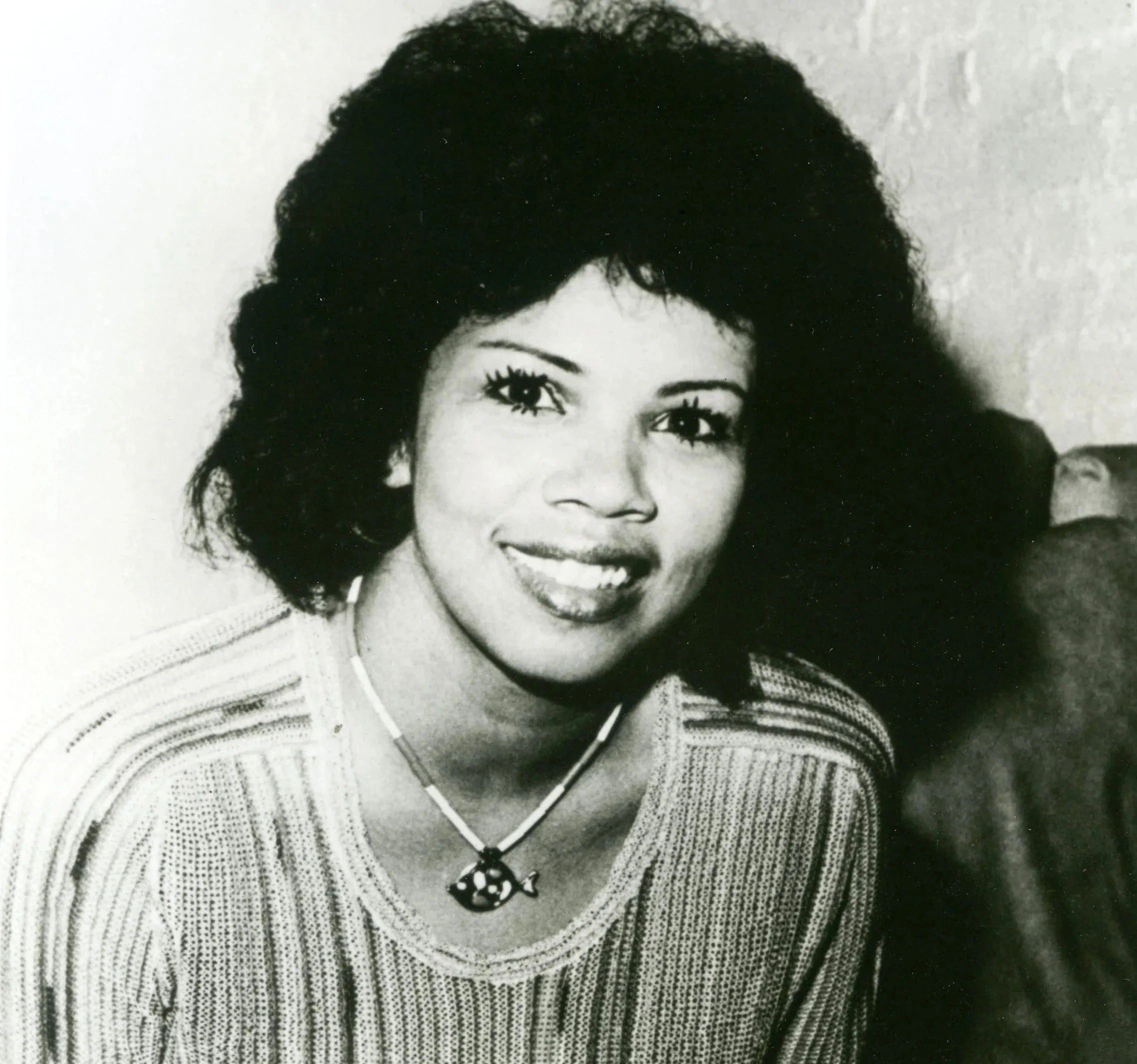
Photo: Pictorial Press Ltd / Alamy Stock Photo
AFTER HER FINAL SET of a seventies residency in Las Vegas, Candi Staton walked into the auditorium to watch Ray Charles perform. The First Lady of Southern Soul settled into her seat, exhausted, and watched Charles finger the piano keys, the stage lights reflecting in his Ray-Bans in miniature. Unbeknownst to her, her husband was searching the aisles looking for her — and he was in a terrible rage.
Candi Staton spent a good deal of the 1970s working the Chitlin’ Circuit, a network of live venues catering to African-American audiences, which had grown out of segregation. Life on the circuit could be brutal. Travelling sometimes for hundreds of miles, arriving to find her dressing room was a toilet cubicle, she would be forced to play all night in front of an audience of hundreds. And all the while she would be anxious about getting paid or, worse, that the club owner might force himself on her.
Societal expectations of African-American women in the 1960s were plain to see in the era’s girl groups, such as Diana Ross and the Supremes, the Velvelettes, Patti LaBelle and the Bluebells and the Crystals. Presented as wholesome and harmless and dressed in matching evening gowns, sequinned dresses and the like, they sang about the highs and lows of teen romance. On ‘Mama Said’, the Shirelles expressed the woes of being a young unmarried woman, left behind as everybody else hears the “chapel bells a-tollin’”. But beyond the period’s sexual conservatism, underneath the songs’ intoxicating beats, harmonies and washes of strings, there were darker themes.
On the 1966 hit, ‘You Keep Me Hangin' On’, Diana Ross appears the victim of emotional manipulation, a woman without agency, trapped in a relationship she wants out of.
Why do you keep a comin’ around Playin’ with my heart?
The music of sixties black female soul singers was equally revealing. On 1967’s ‘Do Right Woman, Do Right Man’, Aretha Franklin protests the decade’s sexual inequality, hinting at sexual objectification.
(A woman's) not just a plaything She's flesh and blood just like her man
Even more sinister is Nina Simone’s song, ‘Buck’, which alludes to physical abuse, leaving us to wonder whether the narrator has ever been on the receiving end of a man's fists.
You know you can crush poor me in two But gentle, oh so gentle are the things you do
What could be read between the lines in such songs was, for Candi Staton, a lived reality. When her husband found her in the Las Vegas auditorium, he dragged her through the hotel lobby and into the lift. When they got to Staton’s suite, somewhere between the 20th and 30th floor, he told her matter of factly: ‘I’m going to kill you tonight.’ In Disco: Soundtrack of a Revolution and The Independent, Staton recounted reasoning with him as he held her over the balcony, explaining the hotel was owned by the mafia. How was he going to make it out of the hotel — and Vegas — with their performer’s corpse on the ground? When he said he would shoot her instead, Staton simply laid back on the bed and replied ‘okay’. ‘I was so tired,’ she explained. ‘That’s how Young Hearts Run Free came about.’
“And then, instead of voicing her own hurt, or pleading with her abusive partner, Candi Staton repurposes her emotional pain into a rallying cry for young women everywhere.”
The song began with a heart to heart. According to Staton, producer David Crawford was often around at Warner Brothers, and he had wanted to work with her for years. One day she was pouring out her relationship troubles to him, and realised the producer was taking notes. ‘You know, I’m gonna write you a song,’ he told her. ‘I’m gonna write you a song that’s gonna last forever.’
It was the mid 1970s, the sexual revolution was in full swing, disco had begun to move into the mainstream and Warner Brothers had opened a disco department. For African-American female artists, who in the previous decade had adopted innocent and saccharine stage personas, disco legitimised a whole new way to perform beneath the spotlight. Patti LaBelle and the Bluebells regenerated into LaBelle, an exuberant trio of disco queens wearing feathered headdresses and space age garb. Around a decade after their doo-wop hit, ‘Down the Aisle (The Wedding Song)’, they reached the top of the Billboard Hot 100 chart in 1974 with ‘Lady Marmalade’, whose refrain ran: ‘Voulez-vous coucher avec moi, ce soir?’ (Do you want to sleep with me tonight?) Illustrating the transformative path black female artists had travelled – from morally pure girl group ingénues to disco and soul divas – Donna Summer recorded the pulsating celebration of carefree sex, ‘Hot Stuff’, in 1979.
With those in attendance including members of Stevie Wonder’s band, Ollie Brown and Scott Edwards, and Smokey Robinson's musical director, Sonny Burke, the LA recording session for ‘Young Hearts Run Free’ had, according to Rivers, a party atmosphere. It suffuses the master tape today. The high spirits were key to pulling off the song’s great trick of situating heartbreak in disco’s emotional uplift – achieved, in part, by recording the backing track first without the players being aware of the song’s theme. And then Candy Staton delivered the vocal of a lifetime. The vulnerability in her voice, carried by understated defiance, is pitch perfect. ‘I sang it in one take,’ Staton told the Guardian in 2015. ‘The hurt in my voice is real. I was singing my life.’ Several of the song’s lines recall Diana Ross and the Supremes’ ‘You Keep Me Hangin' On’.
Say, ‘I'm gonna leave’ a hundred times a day It's easier said than done when you just can't break away
And then, instead of voicing her own hurt, or pleading with her abusive partner, Staton repurposes her emotional pain into a rallying cry for young women everywhere: ‘Oh, young hearts run free’.
Released in 1976, the song reached number 20 in the Billboard Hot 100 singles chart, number 2 in the UK Singles Chart and, in 2022, Rolling Stone ranked the song number 150 in its ‘200 Greatest Dance Songs of all Time’. Approaching 200 million streams on Spotify at the time of writing, it is amongst Staton's most commercially successful and beloved recordings. ‘You can say it, respect yourself, it will just go right over their heads,’ she said. ‘But sing it and it gets into their spirit.’
© 2026 State of Sound. All Rights Reserved.
David Rea
David Rea is a journalist who writes about the intersection of music, culture and history. He is the founder and editor-in-chief of State of Sound. His fiction has recently been featured in Oyster River Pages and Catamaran Literary Reader, and long-listed for the Commonwealth Short Story Prize. He is currently writing a history of British popular music and a historical novel set in the USSR and Hollywood during the interwar period. He lives just outside London with his wife and two sons.
Photo: Arthur McLachlan Rea

Photo: Bob Dylan; credit: Pictorial Press Ltd / Alamy
RELATED
HOW THEY WROTE THE SONG
by David Rea
31 January 2026