ESSAY
‘Outside is America’: Was U2’s biggest failure one of music’s great Icarus moments, or the sound of a band fearlessly blazing their own trail?
U2's Rattle and Hum was one of the most savagely mauled albums of the 1980s. The New York Times called it an 'attempt to grab every mantle in the Rock and Roll Hall of Fame', and The Village Voice deemed it an 'embarrassment'. But for David Rea, aged fifteen in the year of its release, it was an exhilarating widescreen road movie through America. Today, nearly four decades later, it sounds like an honest, warts-and-all document from a band pursuing their passions.
by David Rea
7 March 2026
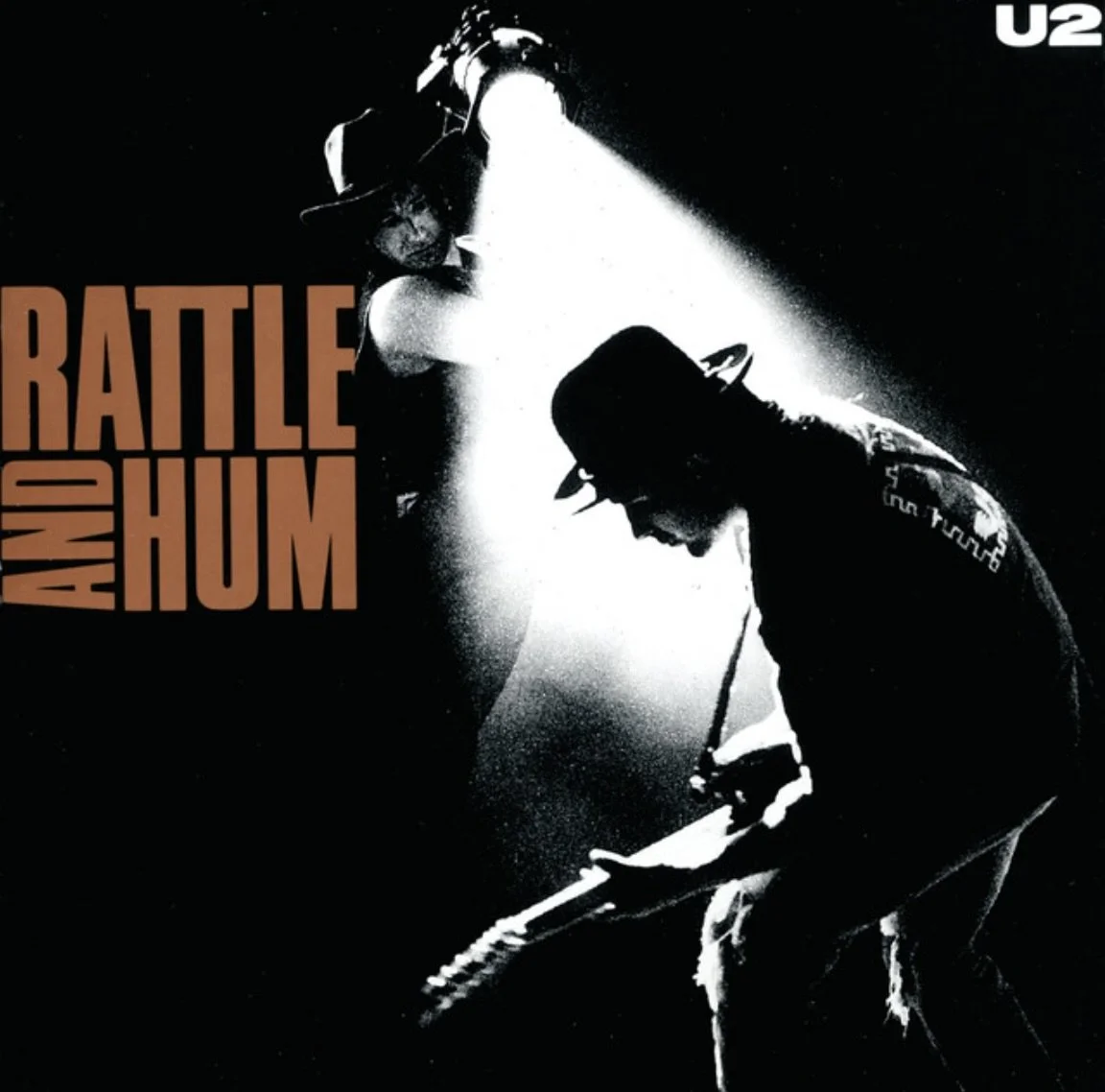
IT BEGAN WITH a conversation in a school cloakroom, a no man's land between the cafeteria and classrooms, where a few pupils would swig from hip flasks and read music papers and porn magazines. The kid, a loner from the year above me, looked up from his Playboy, fixed his extraordinarily intense gaze on me and asked, 'Have you heard U2's Rattle and Hum?' I probably cobbled together an opinion plagiarised from the pages of The Melody Maker. The kid added with prodigious gravity, 'They are in transition'.
In transition. It sounded important. But it didn't make sense. Albums were the culmination of a process, not the recording of one. What on earth was on this new LP, a load of directionless jamming, Adam Clayton theorising about baselines with Bono? The kid gazed into the distance, 'The whole album is an exploration of America'. That sounded important too, and made a bit more sense. At that point in my life, America wasn't so much a place as a patchwork of popular culture; a Hollywood poster collage of deserts, highways and dive bars — with Han Solo, Michael Jackson and Madonna towering in the foreground.
The brief exchange in the cloakroom left a huge impression on me, consolidating an idea I hadn't fully grasped before: music wasn't just a form of entertainment, it was the most important thing in the world. That afternoon I took the bus into town and bought U2's Rattle and Hum on cassette. In my bedroom, accompanied by the traffic outside my window, I pressed play. The white noise of a stadium audience. 'This is a song Charles Manson stole from The Beatles,' Bono said, 'we're stealing it back.' I didn't know it then but a whole new world was about to open up.
In sharp contrast with the pristine glossy production of INXS, Kick, Bon Jovi, New Jersey or Michael Jackson, Bad, Rattle and Hum sounded like a band cruising cultural highways with one hand dangling from the window to feel the wind.
Rattle and Hum is generally seen as U2's spectacular fall from grace. Following the world-conquering success of The Joshua Tree, they reached for the pop music firmament, only for their wings to catch fire from the sun. They told the world they could steal a song back for the Beatles, rewrote one of John Lennon's greatest songs with 'God Part II', took on 'All Along the Watchtower' (already made into the most celebrated Bob Dylan cover by Jimi Hendrix) and the Beatles' 'Helter Skelter', and, well, it showed up their limitations, not to mention hubris. The covers made them sound ordinary, 'God Part II' was filler at best and on hearing Bono's sanctimonious stage patter — 'Am I buggin' you?' — a lot of people were sick in their mouths. The album received mixed reviews and several potentially career-ending poundings. It left the band stranded, out there in America's great mid-century musical landscape with apparently nowhere to go. Three years would go by before they regenerated into glittering postmodern alt-rockers on Achtung Baby.
But back in my bedroom in 1988, I was bewitched. 'Van Diemen's Land' sounded thrillingly stripped down and unpolished. A voice cut in afterwards: 'What has happened between the writing The Joshua Tree album, the recording of The Joshua Tree album, and the tour and now the new songs?' It cleared the stage for some grand artistic statement regarding the band's new direction, but U2 just burst out laughing. (So much for the group taking themselves too seriously.) That laughter typified the album's atmosphere of directionless adventure.
The kid in the cloakroom had helpfully set my expectations. This wasn't an immaculate final product, but a scrapbook of a journey, a director's cut of a widescreen documentary. It was also a bit like a deluxe reissue with alternate versions, before there was such a thing. There was 'Desire', with its thundering rock 'n' roll riff and scrappy harmonica, a live gospel version of 'I Still Haven't Found What I'm Looking For', recorded with The Harlem Gospel Choir, followed by track 6 — what the hell was this? — an excerpt from a song by (I checked the sleeve notes...) Sterling Magee and Adam Gussow busking on 125th Street in Harlem. 'Freedom For My People' was the rawest and most soulful scrap of music I'd ever heard.
The whole album was a thousand miles away from the mainstream of 1988. In sharp contrast with the pristine glossy production of INXS, Kick, Bon Jovi, New Jersey or Michael Jackson, Bad, Rattle and Hum sounded like a band cruising cultural highways with one hand dangling from the window to feel the wind. U2 recorded 'Angel of Harlem' live at Sun Studio with The Memphis Horns. 'All I Want Is You' could have found a home on The Joshua Tree, but elsewhere, the band was fearlessly exploring new territory, pinning badges of inspiration onto the album's fabric as souvenirs. There was an incomprehensibly wild and mad fragment of a guitar solo by someone called (I checked the sleeve notes again...) Jimi Hendrix. And who was that joining in the chorus of 'Love Rescue Me', a voice like razorblades: Bob Dylan. I'd heard of him.
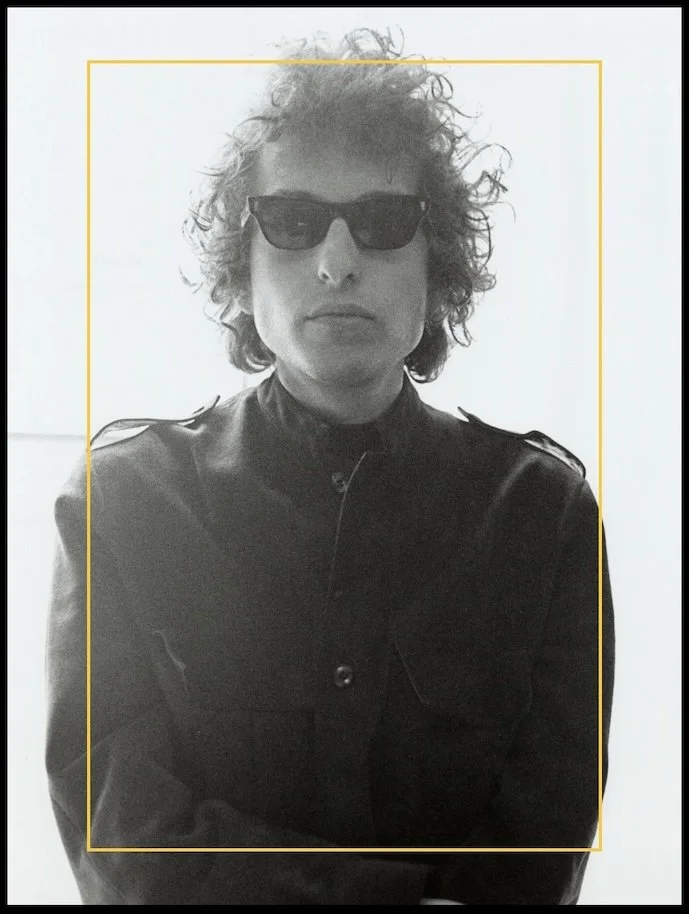
Photo: Bob Dylan; credit: Pictorial Press Ltd / Alamy
Before Britpop excavated British pop of the 1960s and 1970s, U2 mined American music of the 1950s and 1960s, the only difference being U2 weren't jumping on a hyper-commercialised, media-generated bandwagon.
Rattle and Hum was no doubt U2’s Icarus moment. I still wince when I hear their cover of ‘Helter Skelter’ or Bono’s messianic hokum. But it is also an honest document from a fearless band striking out on their own path. The defining ethos of the 1980s British publications NME and The Melody Maker wasn’t just that music was a matter of life and death, but that you should never look back. The music of the past was for your parents (and other dinosaurs), new music, groundbreaking music — that was where it was at. But U2 couldn't care less. Before Britpop excavated British pop of the 1960s and 1970s, U2 mined American music of the 1950s and 1960s, the only difference being U2 weren't jumping on a hyper-commercialised, media-generated bandwagon.
The album’s penultimate track was a live version of ‘Bullet The Blue Sky’. The Edge’s guitar sounded like falling bombs, and Bono’s speech like a voice-over from 1970s New Hollywood.
You take the staircase to the first floor Turn the key and slowly unlock the door As a man breathes into a saxophone And through the walls you hear the city groan Outside is America
Over the days and weeks to come, with the money I’d saved from my shifts at the local supermarket, I bought Bob Dylan, Greatest Hits, Jimi Hendrix, Are You Experienced? and B.B. King, Live at the Regal. Turn the key and slowly unlock the door. From my bedroom window, beyond the mosaic of roofs and aerials, I glimpsed another world. Outside is America.
© 2026 State of Sound. All Rights Reserved
David Rea
David Rea is a journalist who writes about the intersection of music, culture and history. He is the founder and editor-in-chief of State of Sound. His fiction has recently been featured in Oyster River Pages and Catamaran Literary Reader, and long-listed for the Commonwealth Short Story Prize. He is currently writing a history of British popular music and a historical novel set in the USSR and Hollywood during the interwar period. He lives just outside London with his wife and two sons.
Photo: Arthur McLachlan Rea