The alternate pop anthem that defined the 1960s: The Kinks’ Shangri-La
FEATURE
From the Beatles’ All You Need Is Love to Bob Dylan’s The Times They Are A-Changin', the era-defining songs of the 1960s tended to focus on the counterculture. But the Kinks’ miniature pop symphony Shangri-La did so much more. David Rea celebrates one of Ray Davies’ masterpieces.
17 April 2026
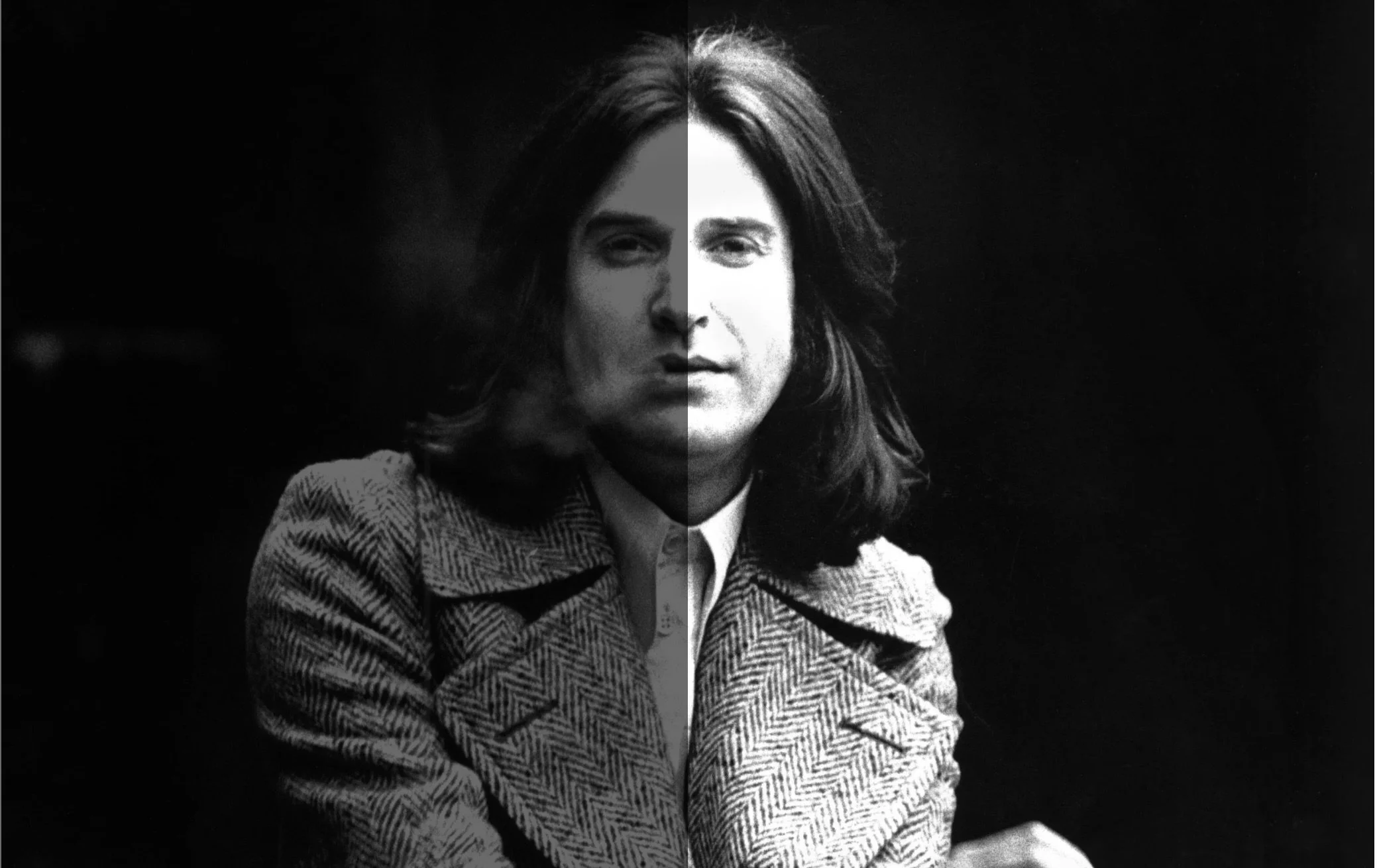
Photo: Gijsbert Hanekroot / Alamy Stock Photo
IN THE EARLY months of 1969, Kinks’ frontman Ray Davies was busy at work on a television script with writer Julian Mitchell. Collaborating in Mitchell’s Chelsea house, knowing the Kinks’ career was in a tailspin, Davies probably felt considerable pressure to make it a success. Following a string of hits in the UK, including a No.1 with 'Sunny Afternoon’, the band released their concept album, The Kinks Are the Village Green Preservation Society in 1968, on the same day as the Beatles’ White Album. The Beatles’ opus spent weeks at No. 1 in the UK in the US, Village Green vanished with barely a trace.
The script meetings in Chelsea had the air of a rehabilitation project. Following the commercial disappointment of Village Green, Granada Television asked Ray Davies to write a musical drama, introducing him to Mitchell. The pair began work on a television script loosely based on Ray Davies' sister and her husband Arthur — whose lives, Davies felt, provided a keyhole into postwar Britain’s broader themes. The Kinks would release a new studio album, eventually titled Arthur (Or the Decline and Fall of the British Empire), and the accompanying film would energise sales when it was released in 1970.
Outside the window of the Chelsea house men in suits and ties walked past, women in head scarves pushed carriage prams and hippies lounged in London’s parks. The idea of utopia had in one way or another been in the air for most of the decade. Most conspicuously, young people disillusioned by the Vietnam War and the nuclear threat explored Eastern philosophies, took LSD, established communes and protested for peace. But postwar Britain promised another sort of utopia. A combination of factors, including greater access to education and the creation of the welfare state, had improved social mobility. Technology was expanding civilisation’s horizons and transforming everyday life. The USSR and USA were competing to put a man on the moon, and by the end of the 1960s the consumer boom had led to a rise in the ownership of fridges, cookers, televisions and cars.
The rapidly changing decade produced many era-defining songs, from Bob Dylan’s The Times They Are A-Changin’ to the Beatles’ All You Need Is Love, but these tended to focus — somewhat myopically — on youth culture. The centrepiece of Arthur (Or the Decline and Fall of the British Empire), the Ray Davies-penned ‘Shangri-La’ was musically and thematically more ambitious. A miniature pop symphony in 7 movements, it looked at mainstream society through the counterculture’s lens, producing an alternate pop anthem for the 1960s.
“At the end of the first movement of two verses, the song appears to come to an end. There is a single strum of the guitar, a beat passes and Verse B begins with a new melody in a higher, major key. The camera moves into the interior of Arthur's home, where we find a picture of domestic bliss.”
Accompanied by an arpeggiated acoustic guitar, the song opens with a burp-after-a-three-course-meal level of self-satisfaction: ‘Now that you've found your paradise’. Between the line’s first and last words, the melody leaves the tonic or ‘home’ chord then circles back to it, giving it a pleasing resolution. Form and content, melody and lyrics appear as one. But the minor key has already flavoured the song with foreboding.
We quickly discover the paradise of the opening line describes the humble home of our hero Arthur. Here he is polishing the car he has always dreamt of owning and sitting by the hearth in his living room. Throughout the 20th century and across the political divide, successive UK governments had inched Britain towards the dream of widespread homeownership. A home is another utopia, a possible place of beginnings, constancy and security. And now thanks to social mobility and improved housing conditions, the dream of owning your own with modern amenities was within many Britons’ grasp. But Davies hint there is trouble in paradise: ‘Here is your reward for working so hard / Gone are the lavatories in the back yard’. Returning to the tonic on ‘hard’, the melody lands on an unresolved major 7th on ‘yard’. The monosyllabic rhyme, which should have triumphantly clinched the idea, has a slightly hollow ring.
At the end of the first movement of two verses, the song appears to come to an end. There is a single strum of the guitar, a beat passes and Verse B begins with a new melody in a higher, major key. The camera moves into the interior of Arthur's home, where we find a picture of domestic bliss: Arthur putting on his slippers and sitting down by the fire. By now the acoustic guitar has been joined by a tinkling harpsichord, sprinkling the scene with stardust, and yet we are still left uneasy. Joined by Dave Davies’ vocal harmony, the second Verse B introduces the theme of mortality. We discover that Arthur is getting old, sitting in an old rocking chair. And just here the hairline cracks in the song’s pretty facade begin to widen and crumble. We are told Arthur ‘can't go anywhere’.
The song turns a shade darker, switching to baroque garage rock. There is a fuzzy electric guitar, the bass and drums pound; Ray Davies’ previously almost cut-glass enunciation becomes rough-edged. Reality is flooding in. This time when the Davies brothers sing Shangri-La there is a tone of disenchantment. But why?
“Up close Arthur’s life had seemed a paradise, a ‘kingdom to command’, but from the skies it looks manufactured and duplicated, identical to everybody else's.”
A few details indicate Ray Davies was thinking of the 1960s counterculture when he wrote ‘Shangri-La’. A synonym for utopia the term had been coined, appropriately enough, in a work a fiction: James Hilton’s 1933 novel Lost Horizon. Located in the Tibetan mountains, Shangri-La is a beautiful, hospitable community without criminality or conflict — a place that shared some of the hippies’ utopian ideals. Whether or not Ray Davies knew of his title’s precise etymology, he was surely aware of its Eastern connotations. Had Ray Davies and Julian Mitchell turned on the television in Chelsea they would have eventually seen tear gas or protest placards; it was a period when the underground was always impacting mainstream society in one form or another. And then there's the lyric ‘can't get any higher’ — was Davies referring to climbing the social ladder or a drug high? In early 1969, the counterculture was in the air people breathed, whether they knew it or not.
Indeed, in the song’s next movement, Ray Davies appears to adopt the countercultural view that society encouraged conformity and obedience: ‘The little man who gets the train / Got a mortgage hanging over his head / But he's too scared to complain / ‘Cos he's conditioned that way’. Social mobility and consumerism might have facilitated homeownership and provided a TV and radio, but it couldn't free you from the burden of debt. Rather than giving people greater liberty, society indoctrinated people like Arthur into a system which imprisoned them.
At this point the narrative viewpoint takes flight, continuing the countercultural perspective from overhead. The key changes back to a minor and we return to baroque garage rock. Up close Arthur’s life had seemed a paradise, a ‘kingdom to command’, but from the skies it looks manufactured and duplicated, identical to everybody else's. ‘Cos all the houses in the street they look the same / Same chimney pots, same little cars, same window panes.’ Aping the capitalist machine’s mindless production of identical lives, the Davies brothers now sing ‘Shangri-La la la la la la…’ over and over. It sounds like a drunken singalong empty of meaning.
And then the coda. Changing down through the gears, Verse B returns and we are back in Arthur’s living room. It feels like everything has come to a sudden, dizzying stop. The image of Arthur in his rocking chair by the fire now has a haunting quality. Homeownership and the consumer dream have conspired to produce a dystopia. Arthur the British everyman is stuck between the four walls of his home, confined by debt, conformity and looming death. Unlike other so-called anthems of the 1960s, which are often tuned to a single emotional key, ‘Shangri-La’ has an almost novelistic complexity.
In the end Arthur (Or the Decline and Fall of the British Empire) didn't rehabilitate the Kinks’ career: the album and the single ‘Shangri-La’ failed to chart in the UK and Granada Television’s film never came to be. But the project left behind a song which probably defines the decade better than any other.
© 2026 State of Sound. All Rights Reserved.
MORE ON THE 1960s

22 November 2025

Support independent music journalism. Sign up to our free newsletter!
✔ All the latest from State of Sound straight to your inbox
✔ In-depth essays, informed reviews, original features & more!
✔ Unsubscribe at any time
RELATED
HOW THEY WROTE THE SONG
by David Rea
31 January 2026