Tangled up in Blue
5.
from Blood on the Tracks
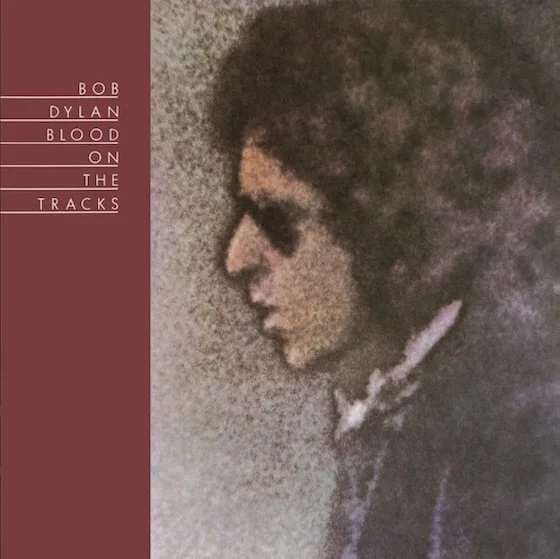
If you arrange Dylan’s album covers on a timeline, alongside Polaroids of his lovers, a clear pattern emerges. Reflecting the drug-filled, romantic turmoil of the period, the first half of the 1960s is a chaotic mosaic of portraits — Dylan looking pained on The Times They Are a-Changin’ and out of focus on Blonde on Blonde — jumbled together with black-and-white images of Suze Rotolo, Joan Baez, Sara Lownds, Edie Sedgwick and others.
But as we move along the timeline into the second half of the 1960s, the women's faces disappear, leaving only one. On 22 November 1965, Dylan married Sara Lownds, a shy former model, and someone who loathed the rock 'n' roll lifestyle. He adopted Sara’s daughter from a previous marriage, and the couple wasted little time in having four children of their own. ‘Outside my family, nothing held any real interest for me,’ Dylan wrote in Chronicles. ‘I was fantasising about a nine-to-five existence, a house on a tree-lined block with a white picket fence… That was my deepest dream.’ The marriage coincided with a relative creative lull. There were two triumphs, John Wesley Harding (1967) and Nashville Skyline (1969), more creatively subdued and musically traditional than the preceding plugged-in trilogy. But after that, Self Portrait (1970), New Morning (1970) and the soundtrack Pat Garrett & Billy the Kid (1973) suggested the well of creativity had run a little dry. Was marriage bad for Dylan’s art? Had emotional stability killed off his creativity?
After he and Sara moved to Malibu in the spring of 1973, their marriage began to falter. And although Dylan has always denied it, Blood on the Tracks — his best album since Blonde on Blonde, and one many consider his greatest — is about the ensuing emotional fallout. Bob and Sara’s son Jacob Dylan said of the album: ‘When I'm listening to Blood on the Tracks, that's about my parents’.
The breakdown of his marriage landed like a bomb in Dylan's life, shattering everything and sending him out on a metaphorical road. Opening the album, ‘Tangled Up in Blue’ is a road movie in song, edited together in a series of jump cuts. The song’s hero is a breathless searcher, propelled along his journey by the song’s unrelenting momentum, sifting through memories, failing to make connections. Story fragments don't quite fit together, like the pieces of an incomplete puzzle.
Dylan is on record saying the album was inspired by Anton Chekhov’s writing, and has compared the song to a painting: ‘…where you can see the different parts but then you also see the whole of it. With that particular song that's what I was trying to do… with a concept of time and the way the characters changed from the first person to the third person, as you are never quite sure if the third person is talking or the first person is talking. But as long as you look at the whole it really doesn't matter’.
Whatever the inspiration, the song perfectly captures the emotional and psychological disorientation of a break-up: the endless series of disjointed scenes, small details magnified by emotion, the daily confusion blinding you to the larger picture. Has such a universal experience ever been so successfully depicted in a song?
Sara
4.
from Desire
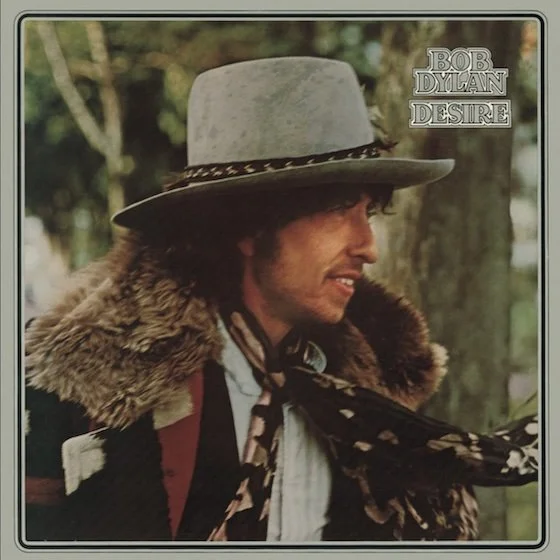
According to Jack Levy, Bob Dylan wrote the verses in the summer of 1975 on the coast at East Hampton, the sound of the waves dredging memories of his early marriage with Sara: ‘when the children were babies and played on the beach’. ‘Sara’ is so transparent a plea for reconciliation with his wife it verges on a public statement. The memories of family trips to the seaside, the declaration that he wrote ‘Sad Eyed Lady of the Lowlands’ for her, the decision to use his wife's real name instead of a pseudonym in the title. The clarity is unusual for a lyricist renowned for obfuscation, for someone who was so good at ‘keeping things vague’, as Joan Baez famously put it in ‘Diamonds and Rust’.
On the final recording session for Desire, Dylan was accompanied in the studio by Sara. As if his intention wasn't spelt out clearly enough in the lyrics, according to Larry Sloman, Dylan turned to his wife before beginning a take of the song and said, ‘This is for you’.
Just Like a Woman
3.
from Blonde on Blonde
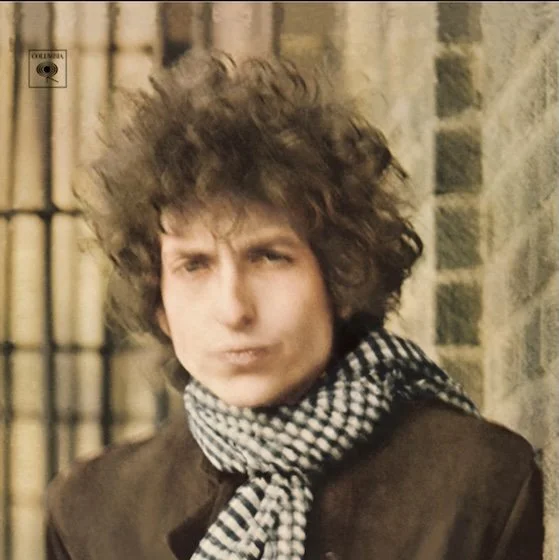
‘He had a piano in his room at the hotel,’ Al Kooper said, recalling the Blonde on Blonde sessions in Nashville. ‘During the day I would go up there and he would teach me the song. I would be like a cassette machine. I would play the song over and over on the piano for him.’ The endless repetition also meant Kooper could go on ahead of Dylan to the studio to teach the band the song, ready for Dylan's arrival later.
Allegedly written about Dylan's brief affair with Edie Sedgwick, the lines ‘please don't let on that you knew me when / I was hungry and it was your world’ more likely describe his early relationship with Joan Baez, when she was at the centre of the folk revival (appearing on the cover of Time magazine in 1962) and he was the upcoming ragamuffin. The timeline supports the hypothesis. According to authors Margotin and Guesdon, Dylan and Baez ended their liaison in the spring of 1965, and the song was probably finished in a Nashville hotel room during the Blonde on Blonde sessions only months later. It was a short enough period for bitterness to linger.
In ragged unison, the organ, piano and harmonica give a lush metallic sheen, and the turnaround guitar figure between chorus and verse is as pretty as the song’s derided ribbons and pearls. However long the song’s subject has stood on a pedestal, in the end she will see that she is ‘like all the rest’. And then comes the chorus, wave after wave of misogynistic vitriol, the weary disdain in Dylan's stretched vowels something to behold. Dylan biographer Robert Shelton has suggested the song title’s sexist male platitude is playfully ironic. But Marion Meade had it right in the New York Times in 1971 when she said: ‘there's no more complete catalogue of sexist slurs’. For those wanting some kind of redress, Shelton notes Roberta Flack’s cover transforms ‘Just Like a Woman’ into ‘a compassionate lament for women's victimisation’.
You're a Big Girl Now
2.
from Blood on the Tracks
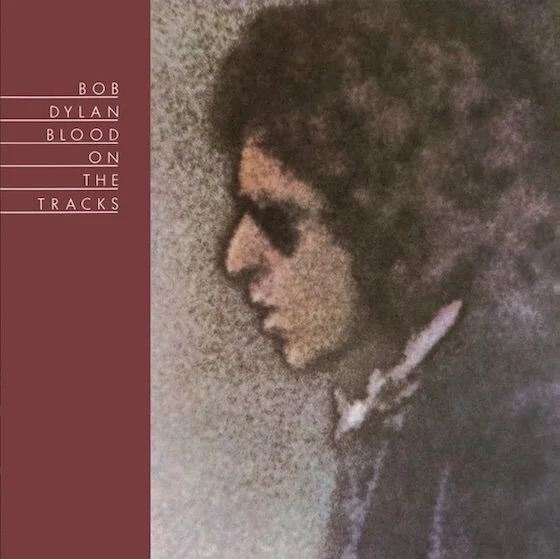
Famously a man of many masks, Bob Dylan ripped them all off on Blood on the Tracks to unleash an emotional storm. The complexity of feelings on the album, including Dylan’s readiness to admit his own mistakes, makes it his most mature work up to that point. There had always been moments of balance in his songwriting, admissions of personal failures, but they were fleeting. (From ‘One Too Many Mornings’: ‘You're right from your side, I'm right from mine’.) But here it is on a whole other level. ‘We’re idiots, babe,’ he sings on ‘Idiot Wind’, ‘It’s a wonder we can even feed ourselves.’
‘You're a Big Girl Now’ is probably the album’s clearest case in point. Whilst ‘Don’t Think Twice’ conveyed almost petulant anger towards a lover, and ‘Ballad in Plain D’ wagged an accusatory finger at those who had wronged him, this song faces all the pain of a break-up with eyes wide open, only slightly blurred by tears. Dylan accepts his lover’s infidelity is a result of his own, and a consequence of her emotional growth: ‘I know that I can find you / In somebody's room / It’s a price I have to pay / You’re a big girl all the way.’
The version which appears on the studio album, decorated with flourishes of acoustic guitar, is a touch florid for such an intimate subject. ‘Take 2’, which appears on More Blood, More Tracks: The Bootleg Series Vol. 14, is more affectingly direct, featuring one of Dylan’s most heart-wrenching vocals. ‘I can change, I swear,’ he sings with exhausted determination, ‘I can make it through.’ And then with compassion for his former lover, suggesting the depth of the love they once shared, he adds: ‘you can make it too’.
Sad Eyed Lady of the Lowlands
1.
from Blonde on Blonde
In the decade the Beatles and the Beach Boys began to use the studio as a creative toolbox, Dylan remained resolutely old-fashioned in his approach to recording. In 1966, as the Fab Four were playing around with tape loops and Brian Wilson was orchestrating baroque pop symphonies, Dylan tended to scribble down some chords during the making of Blonde on Blonde, hand them out and, with little explanation or ceremony, launch into the first take.
Dylan's clapped-out state of mind by 1966 is well illustrated in his meeting with Françoise Hardy. After a disastrous opening acoustic set at the Paris Olympia, Dylan refused to come out for the second half, demanding that Hardy, a fan of Dylan’s and in the audience, come to his dressing room. ‘So I went to meet him,’ Hardy told Uncut in 2018. ‘Bob Dylan was already in his room, he wanted me to come in, and he played me two songs from his last album, which wasn’t yet released in France — Blonde on Blonde’s ‘Just Like a Woman’ and ‘I Want You’. And that was it! I never saw him again.’
A man half-defeated by exhaustion attempting to woo a beautiful woman with a song; it is not so far away from the Dylan who sings ‘Sad Eyed Lady of the Lowlands’. Emaciated and bone pale, through a fog of marijuana smoke, Dylan sings this reverential, otherworldly hymn to the ‘sad-eyed lady’ with ‘matchbook songs’ and ‘gypsy hymns’. These images refract through the instrumentation’s metallic alloys, throwing out a coloured array of meanings. Delighting the mind as much as it moves the heart, this 11-minute epic is arguably the most original love song ever written.
© 2026 State of Sound. All Rights Reserved