A very British take on an American Odyssey: David Bowie’s ‘Space Oddity’ revisited
THE ANATOMY OF A SONG
David Bowie’s first great song appeared to undermine the ideals of NASA’s moon landings, but it said much more about David Bowie’s ‘inner space’ at the end of the 1960s.
by David Rea
10 July 2026
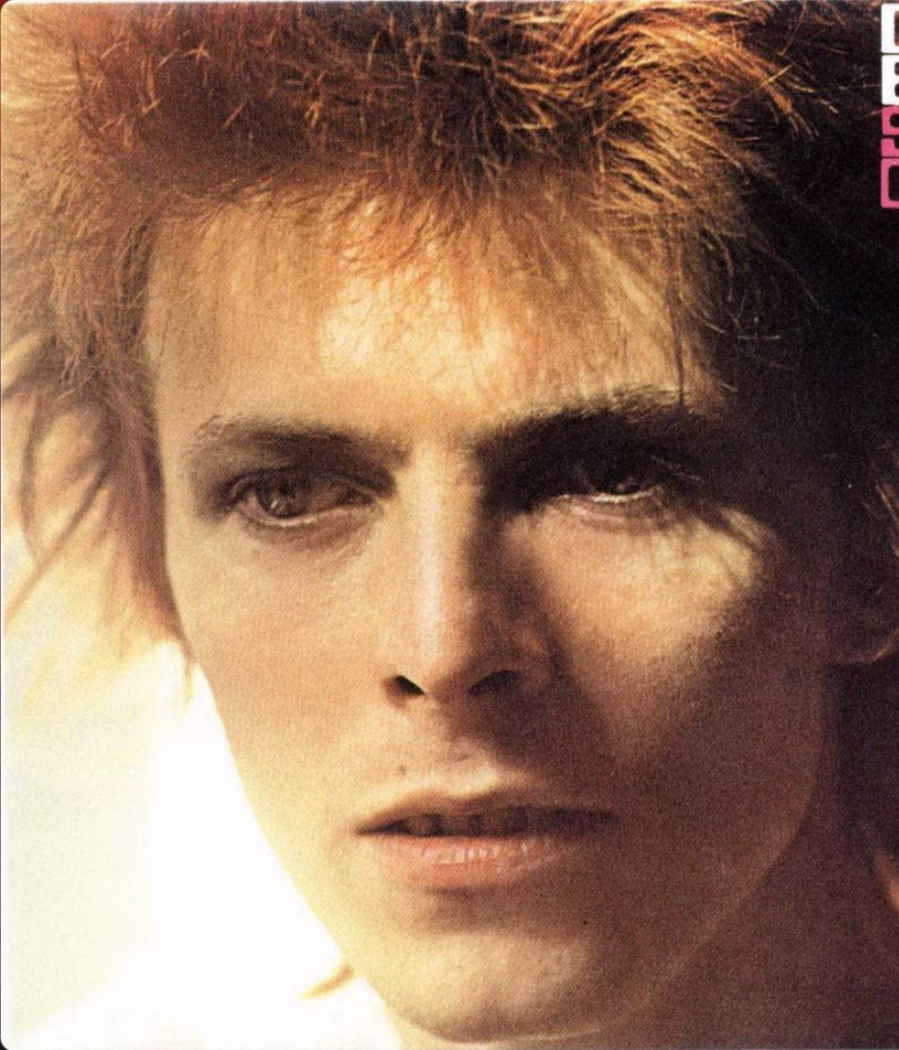
Photo: Album cover of RCA’s 1972 edition of Space Oddity.
THERE WAS GOOD REASON for the nervous atmosphere hanging over Apollo 11 as it stood on the launch pad on 16 July 1969. NASA's years-long programme to put a man on the moon had been plagued with glitches, accidents, training fatalities and in-flight emergencies. Around that summer, 'Bad Moon Rising' by Creedence Clearwater Revival and 'Space Oddity' by David Bowie soundtracked the public's sense of foreboding in distinctly different ways. The message of impending apocalypse of 'Bad Moon Rising' was rooted in American blues and rockabilly. 'Space Oddity' conveyed a similar mood in a stately five-minute pop epic, delivered in Bowie's clear English accent.
In the end, Apollo 11 successfully landed on the moon, of course, where NASA's astronauts planted the American flag. It signified the USA's victory over the USSR in the space race, closing one of its most significant chapters. For a country so influenced by the Enlightenment ideal to better mankind through science and reason, the American victory felt apposite. But at the very moment the USA claimed its crown, Bowie appeared to recast the story of scientific achievement as one of scientific failure — 'your circuit's dead, there's something wrong' — resulting not in mankind's progress but in an individual's disconnection and isolation. On Apollo 11's return to Earth, Neil Armstrong, Buzz Aldrin and Michael Collins went on celebratory parades through New York and Chicago; at the close of 'Space Oddity' we have Major Tom apparently floating alone in space, unable to communicate with Earth. The song is, in more ways than one, a decidedly British take on a very American odyssey.
I
“Through the 1960s the space race increasingly narrowed the distance between science fiction and science fact. 'Space Oddity' was the point at which the gap was at its narrowest.”
I
Alternative worlds have long appealed to the British imagination: William Shakespeare's A Midsummer Night's Dream, John Milton's Paradise Lost, Jonathan Swift's Gulliver's Travels, Lewis Carroll's Alice's Adventures in Wonderland and J.R.R. Tolkien's The Lord of the Rings, to name just a few. Although the genre had earlier prototypes, it was H. G. Wells in the 1890s who published three groundbreaking science-fiction novels, The Time Machine, The Invisible Man and, one of the earliest major alien invasion novels, The War of the Worlds.
British psychedelia continued the tradition, journeying through Arcadian gardens, misty realms of kings and queens and children's literature. As the counterculture explored altered states of mind, Eastern philosophies and religions, LSD and transcendence, space travel provided a spectacular metaphor for journeys through 'inner space'. In 1966 fans dropped the needle on 'Tomorrow Never Knows' from The Beatles' Revolver to hear the sound of an Indian drone, described by Ian MacDonald as: 'a cosmic keynote resounding through space'. Having played their songs live at London's UFO club, with its celebrated reality-transcending light shows, Pink Floyd released their debut The Piper at the Gates of Dawn in the summer of the same year. It opened with 'Astronomy Domine', setting a space flight to eerie music. The same album's nine-minute instrumental odyssey, 'Interstellar Overdrive', was in a similarly unsettling cosmic key, with passages of calm ambience and nerve-shredding discordance. Meanwhile, space travel permeated every aspect of life on Earth; children played with toy space rockets and families watched TV shows like Star Trek. David Bowie watched Stanley Kubrick's 2001: A Space Odyssey in 1968, apparently stoned out of his mind. According to Tony Visconti, Bowie also discussed sci-fi writers like Ray Bradbury and Isaac Asimov with him.
Through the 1960s the space race increasingly narrowed the distance between science fiction and science fact. 'Space Oddity' was the point at which the gap was at its narrowest. Bowie's song about Major Tom's space flight was released in the UK on 11 July 1969, just five days prior to Apollo 11's launch. Today, its proximity to NASA's most celebrated space expedition lends the song a unique zeitgeisty charge, but at the time many felt it had a cheapening effect. Visconti, who refused production duties, wasn't alone in thinking it was a publicity stunt.
The musical ambition of 'Space Oddity' was of a piece with British pop in the late 1960s, which tended to be more compositionally complex than its American equivalent. Compare and contrast, for example, Bowie's miniature symphony in 12 parts (recorded for a then considerable cost of £493.18) with Creedence Clearwater Revival's two-minute, foot-stomping banger, 'Bad Moon Rising'. Then listen to the verse-chorus-verse-chorus structure of Buffalo Springfield's 'For What It's Worth' and The Doors' 'Break On Through (To the Other Side)' alongside The Beatles' 'A Day in the Life' and The Kinks' 'Shangri-La'.
The lengthy production of 'Space Oddity' featured brand-new music technology and moments of make-do inspiration. The song's principal science-fiction sound effect was created using a Stylophone, only just invented, played by touching a stylus to a small metallic keyboard. To help create the take-off sequence, a cigarette lighter was used in place of a bottleneck slide. Using just eight tracks, Bowie threw everything at the song: a folky 12-string acoustic guitar opening, a spoken-word, English-accented countdown, punchy, poppy guitar breaks decorated with handclaps, a sweeping string section, the 'for here am I sitting in a tin can' bridge accompanied by a trilling flute and, finally, a one-minute outro with a dissonant crescendo, suggesting Major Tom's expedition ends in some unnamed interstellar disaster. Producer Gus Dudgeon's colour-coded diagram of the arrangement must have looked like a musical Frankenstein, but when you listen to the song each section segues to the next with its own internal logic.
I
“We could argue the song is Bowie subverting the USA's can-do Enlightenment optimism with a very British shrug. But the song is more likely reflective of more down-to-earth concerns.”
I
It is not only Bowie's spoken countdown which lends 'Space Oddity' its distinctly English tone. The word 'oddity', a pun on the grand-sounding 'odyssey', could have come from the lips of an Edwardian gentleman, as could the syntax 'for here am I' and the phrase 'floating in a most peculiar way'. It was the distance provided by the Atlantic which allowed Bowie to separate the song from the atmosphere in America at the time, and produce what he called an 'antidote to space fever'. (Bowie in fact called 'Space Oddity' a 'song-farce' soon after the moon landing.) 'The publicity image of a spaceman at work is of an automaton rather than a human being,' he said, 'and my Major Tom is nothing if not a human being.'
With his intellectual inclinations, Bowie is sometimes viewed as a visionary or even a prophet. In a 1999 interview with the BBC, journalist Jeremy Paxman suggested the internet was simply a 'tool'; Bowie retorted with prescience: 'the potential of what the internet is going to do to society, both good and bad, is unimaginable.' It is tempting to read an era-defining message in 'Space Oddity'. In 2004 Camille Paglia suggested it was a concluding statement on the late 1960s countercultural optimism: 'As his psychedelic astronaut, Major Tom, floats helplessly into outer space,' Paglia wrote, 'we sense that the '60s counterculture has transmuted into a hopelessness about political reform ('Planet Earth is blue/And there's nothing I can do').' We could equally argue the song is Bowie subverting the USA's can-do Enlightenment optimism with a very British shrug. But the song is more likely reflective of more down-to-earth concerns. Writer Chris O'Leary has suggested the song is autobiographical, the space flight a metaphor for David Bowie's life as the 1960s came to a close. He was an artist whose career remained somewhat directionless and whose romantic relationship with Hermione Farthingale was ending: 'Tell my wife I love her very much, she knows'.
Bowie's trick of situating a sense of personal isolation in space, something Elton John would repeat with 'Rocket Man', produced his first great song, signalling a scale of ambition which was only just beginning to show itself.
© 2026 State of Sound. All Rights Reserved.
David Rea
David Rea is a journalist who writes about the intersection of music, culture and history. He is the founder and editor-in-chief of State of Sound. His fiction has recently been featured in Oyster River Pages and Catamaran Literary Reader, and long-listed for the Commonwealth Short Story Prize. He is currently writing a history of British popular music and a historical novel set in the USSR and Hollywood during the interwar period. He lives just outside London with his wife and two sons.
Photo: Arthur McLachlan Rea

RELATED
HOW THEY WROTE THE SONG
by David Rea
31 January 2026