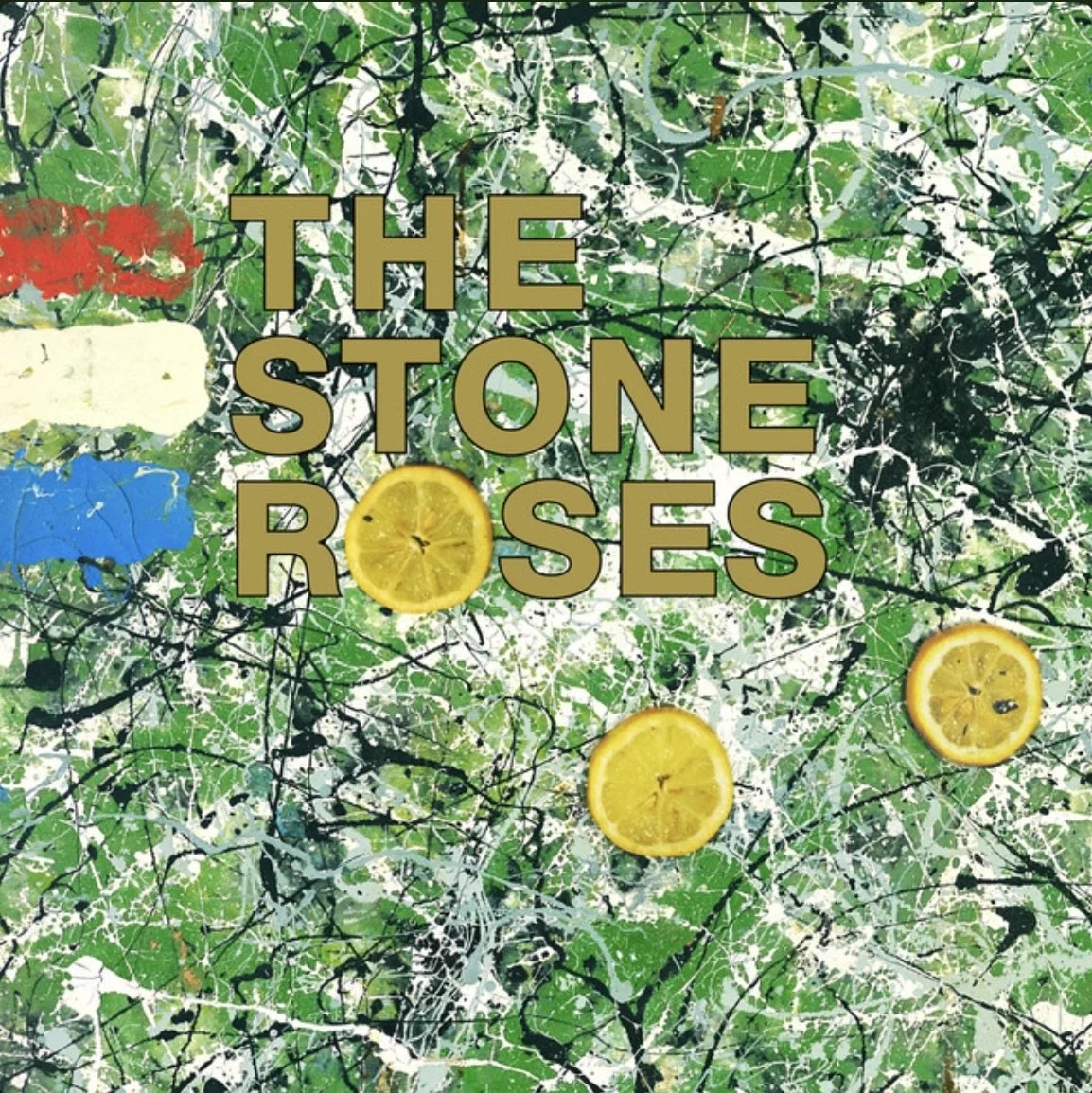
‘They all wanted to be the front man’: how the Stone Roses made their classic debut album
MAKING A MASTERPIECE
Beginning with shambolic preproduction, driven by a puritanical work ethic and featuring last-minute moments of inspiration, David Rea explores the novelistic story behind The Stone Roses’ classic debut album.
30 May 2026
WE ARE ALL FAMILIAR with the Classic Debut Album with its long list of exemplars, from Elvis Presley to The Strokes. But much rarer is the Shit Debut Album by a Great Artist: albums so bad or so at odds with artists’ overarching narrative they have been sidelined from the conversation. David Bowie’s 1969 David Bowie (re-issued in 1972 as Space Oddity) is widely seen as his zero hour, but two years earlier in 1967 he released his real debut, also called David Bowie, a truly unsettling brand of baroque music hall pop. Before Transformer, Lou Reed released Lou Reed, featuring an early version of ‘Berlin’. In an interview with The Varsity in 1976 Reed said of the album: ‘it’s got some of the best songs I ever wrote, but the production sucks’.
Reed’s summation could equally apply to the Stone Roses’ unreleased debut album of 1985, Garage Flowers, which included early versions of classics ‘This is the One’ and ‘I am the Resurrection’. Produced by Martin Hannett, the LP sounds cheap and cold, all post-punk metallic surfaces and warehouse echo — hard-edged rock not saccharine pop. Reni didn't sing on the LP, and Ian Brown’s voice, stripped of the drummer’s harmonies and drenched in reverb, is sometimes flat; John Squire’s melodic guitar lines are acid sour, smudged in wailing feedback. Listening to Garage Flowers now, it seems genuinely bonkers the same band went on to record The Stone Roses, their fabled and critically feted masterpiece.
The back cover sleeve of the Roses’ 1988 single ‘Elephant Stone’ reads: ‘produced by Peter Hook’, the then member of post-punk, dance and electronica trailblazers, New Order. Although the credit has been placed at the bottom, it is written in a font larger then the track titles: testament to Hook’s cachet at the time. The single’s accompanying press release laid out in black-and-white the band’s tangental links with the acid house scene. These were the beginnings of the Stone Roses’ association with British dance music, which peaked with the indie-dance crossover single ‘Fool's Gold’. ‘That hunger for music that people had then was awesome,’ Ian Brown told Dave Haslam in 2000. ‘It was a true revolution. There was pure unity; that was the feeling.’ House music’s feeling came through in contemporary British rock-pop-indie music. Noel Gallagher has acknowledged the way house music's jubilant buzz infused Definitely Maybe in songs like ‘Live Forever’. And something of house music’s spirit also found its way into the Stone Roses’ first LP: the harmony-laden pop melodies, sunburst and star-twinkling guitars, sugar-spun with Reni’s drums, in that bright, frictionless production. One can just imagine the line from ‘She Bangs the Drums’: ‘the past was yours but the future’s mine’, sampled and mixed into a DJ set at sunrise somewhere in an English field, receiving a cacophony of roars, whoops and whistles from ravers.
But in musical terms, acid house and The Stone Roses were only a narrowly overlapping venn diagram. There were danceable grooves on the likes of ‘Waterfall' and ‘Don’t Stop’, a fact accentuated by Stephen Cresser (aka Cressa) throwing shapes behind the statuesque John Squire at gigs, but the Roses’ debut was always more late sixties than late eighties. The first music Brown remembers listening to was the Beatles and the first record he bought was the Sex Pistols’ ‘Pretty Vacant’, and the other three members of the group would gawp in awe at Led Zeppelin videos for hours. Given these influences, producer John Leckie seemed the perfect fit. Beginning his career making tea at Abbey Road Studios for the likes of Procol Harum, Ringo Starr and Pink Floyd, Leckie went on to work with everyone from John Lennon and XTC to Public Image Ltd and The La’s. When he heard the Stone Roses he heard his kind of music. ‘That dusty 1960s kind of thing,’ he described it as, ‘that’s what I do, my mark, my era.’
Despite their apparent musical synergy, at preproduction sessions at Stockport's Coconut Grove studio, the producer and band got off to a fractious start. According to the studio’s in-house engineer and producer, Lawrence Stewart, when the band first started playing, Leckie’s face went red – with anger or embarrassment, it isn't clear. For a group who would soon have the audacity to suggest playing a gig on the moon, they sounded completely shambolic.
“(John Leckie) told me to turn off the recording equipment,’ Stewart remembered. ‘He went back inside the live room and told everybody to shut up. He went through the musicians one by one – and told them what to do. It was much much worse than anybody could ever fathom.”
According to Ian Brown, the band had lied to Silvertone when they signed, claiming they had dozens of songs when they really had fewer than ten. Upending the idea that debuts are de facto ‘best of’ compilations from the wilderness years, the band wrote several of the tracks for The Stone Roses in a matter of weeks after they signed their deal, including three of their greatest songs: ‘Made of Stone’, ‘Bye Bye Bad Man’ and ‘I am the Resurrection’.
One of the album’s highlights, the fluidly intricate ‘Bye Bye Bad Man’ guitar solo was assembled on the hoof by Squire, shut away in a studio backroom of breeze blocks and loose, spewing wires.
To save money, the early recording sessions at Battery 2 studio were done at night, starting as the sun went down and finishing several hours after it had risen the next day. John Leckie was struck by the band’s borderline puritanical work ethic: they hardly ever drank and barely touched drugs when working on the album. Above the studio, the moon waxed and waned. Sessions went by. The group became less shambolic.
To generate new melodies, Leckie played recordings backwards for the band. On hearing ‘Waterfall’ in reverse John Squire heard new lyrics in the nonsensical babble. When ‘Don’t Stop’ was done, sensing they had something special in the can, the band lay down on the floor in front of the mixing desk and, passing around a fat joint, listened to the playback. The final few bars, when Mani’s back-to-front bass comes back in, are Brown's favourite on the album.
It was ‘very much a collaborative thing,’ Leckie told Sound on Sound in 2005. ‘On any given day the guys would come in with songs that Ian and John had demoed on the Fostex, consisting of just guitars and vocals.’ ‘I am the Resurrection’ had started out as a playful soundcheck exercise. Mani would play the Beatles’ ‘Taxman’ riff in reverse and Reni and Squire would add in parts over the top. They soon realised they had the scraps of a song. It became the closing number at concerts and they wanted to finish the album with it, reproducing their extended live outro of congealed feedback. But Leckie pulled them back from the alt-rock noise, explaining it would sound boring on record, and pointed them towards an instrumental collage. ‘We had some bits left over on tape,’ Squire said in an interview with Total Guitar, ‘which we just dropped in at exactly the right points.’
As 1989 began, the Roses appeared on Tony Wilson’s The Other Side of Midnight. Their live performance of ‘Waterfall' on that day was an important chapter in their creation myth. Here were four boys from the streets of Manchester in a whitewashed studio, Ian Brown, John Squire and Mani all wearing jeans, Ian Brown in his canary yellow polo shirt and Mani’s bass guitar flecked in Jackson Pollock’s drips and splashes. All four of them radiated languid cool. The performance not only set much of the band’s visual template for their first album phase (the photographs from the performance provided the inlay artwork for The Stone Roses), but also came with an apology from one of Manchester's pop music gatekeepers, Tony Wilson:
“A Manchester group whose rock and roll stance I have seriously disliked for 4 or 5 or 6 years. Never had any time for the group, then a couple of months ago a drummer called Ringo Star (the other one) made me listen to a single which I absolutely loved. It turned out to be them. The Stone Roses. ’89 begins then, with a complete admission of error on my part. Huge apologies… The Stone Roses.”
By the time the group had arrived at Rockfield Studios in Wales for the final stage of recording, the mood according to John Leckie was ‘energetic’ – fortuitously given that time was beginning to press. Some of the best moments on The Stone Roses came quickly at the last moment, when everybody had started to watch the clock. In his bedroom, Squire set up a small 16-track recorder and spent hours working out guitar parts. One of the album’s highlights, the fluidly intricate ‘Bye Bye Bad Man’ guitar solo was assembled on the hoof by Squire, shut away in a studio backroom of breeze blocks and loose, spewing wires. When he was done he stood up, strolled into the studio and recorded it with little fuss or ceremony.
Some of the key moments in music history have no visual record. Nobody has a camera. The ‘record’ button is never pressed. Sometimes all that remains are a handful of recollections, washed up in biographies and websites. Other times we just have the artefact of the completed song. ‘I'm the biggest Roses fan,’ Ian Brown told John Robb in 2004. ‘I used to get to see them just jamming for hours on end. Five hours would go by just like that.’ Over two days in early 1989 Ian Brown stood to one side at Rockfield Studio and watched John Squire, Reni and Mani mosaic together the extended instrumental outro to ‘I am the Resurrection’. Did they stand facing one another, as they did over two decades later in the documentary The Stone Roses: Made of Stone – faint smiles on their lips and the musical chemistry palpable in the air?
The Stone Roses’ self-titled debut album was released on the 17th of April 1989, peaking at number 19 in the UK album charts in February of the following year. It received mixed reviews. John Leckie had realised early on in the production process: ‘they all wanted to be the front man…this is a band of four guys and you've got to give them equal importance’.Yet Brown and Squire later felt he hadn't quite got there, complaining the drum and bass were not loud enough.‘Twee,’ was Squire’s even more damning appraisal. It wasn’t long before the Roses and Leckie were in Sawmills studio in Cornwall recording ‘Fool's Gold’. Later, much later, there would be swollen budgets, parallel lines of cocaine and, oddly for a band who had a generational talent in Reni, drum machines. John Squire wouldn't come out of his bedroom, Reni wouldn't even come to the studio. Reflecting on the band’s demise in The Stone Roses: Made of Stone, Mani said,
“We were one of the toughest little gangs in town…[but] as soon as other dynamics come in…the dark matter which is holding you together is becoming fragmented.”
Dark matter. Even today we don’t fully understand it. It doesn't respond to light as one would expect. It can only be inferred from its gravitational effect. The convergence of forces which produced The Stone Roses are equally difficult to discern, but the album’s far-reaching impact is plain to see. It restored British pop-rock to its former status, paving the way for Britpop, and helped usher in the indie-dance crossover to come.
The LP was something the band never matched again. Has anybody?
© 2026 State of Sound. All Rights Reserved.
Tracklist
1. I Wanna be Adored
2. She Bangs the Drums
3. Waterfall
4. Don't Stop
5. Bye Bye Badman
6. Elizabeth My Dear
7. (Song For My) Sugar Spun Sister
8. Made of Stone
9. Shoot you Down
10. This is the One
11. I am the Resurrection
RELATED
ESSAY
20 September 2025
READ ON
THE ‘ONE TO WATCH’ INTERVIEW
Questions by David Rea
15 November 2025