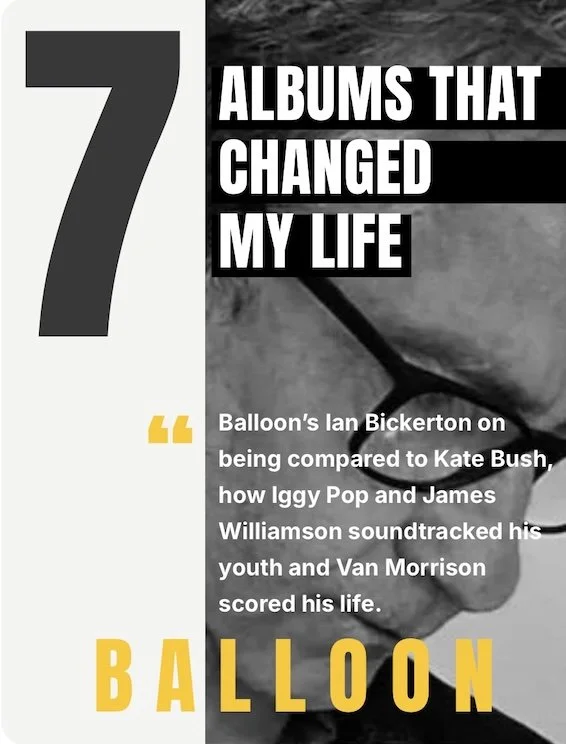
7 ALBUMS THAT CHANGED MY LIFE
7 albums that changed my life with Balloon
Balloon’s Ian Bickerton on being compared to Kate Bush, how Iggy Pop and James Williamson soundtracked his youth and Van Morrison scored his life.
Image: photo courtesy of Lydia van Der Meer; design by State of Sound
11 April 2026
Ian Bickerton: I love lots of albums, but only a few have been life changing. Most span a narrow band of time in my teens in the late 1970s, their impact reflective of my (emotional) circumstances at that moment. However, the reason they endure is their continued relevance; their ability to make of the past not just the present but, more importantly and excitingly, the future.
The Kick Inside
1.
Kate Bush
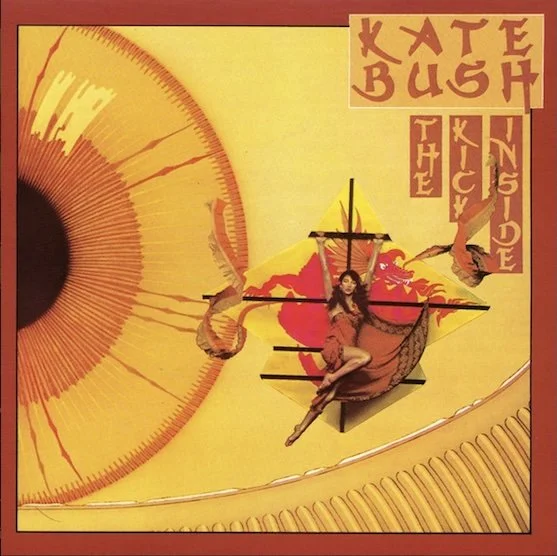
Kate Bush is often imitated but never bettered. She’s a true original. I was a fan from day one. Dunno why songs about pregnancy and period pain appealed to me as a teenage boy, but I guess that speaks to Kate’s genius. Plus, my head was buried deep in the Brontë sisters and Thomas Hardy. Her single-mindedness, her determination to steer her own path, would prove important in my musical education.
Early Balloon played as a trio. We did all the London folk clubs (Troubadour, Bunjies, 12-bar), but it was at a show at the Tabernacle, in Notting Hill, where disaster befell us. Harriet (our violinist) broke a string while tuning up and fled the stage in tears. David (guitarist) was suddenly overcome with nausea and unable to continue. I found myself alone on stage, facing an audience that was quickly losing the little interest it had in our music. It was fight or flight. Setting aside nerves, I managed a couple of songs. Later, as he continued to recover in a cubicle of the men’s lavatories, David overheard one gig-goer discussing my performance. ‘Not bad that lad, eh?’ the fella said, presumably to a pal standing at the adjacent urinal. ‘Sounded a bit like Kate Bush….’
Kill City
2.
Iggy Pop and James Williamson
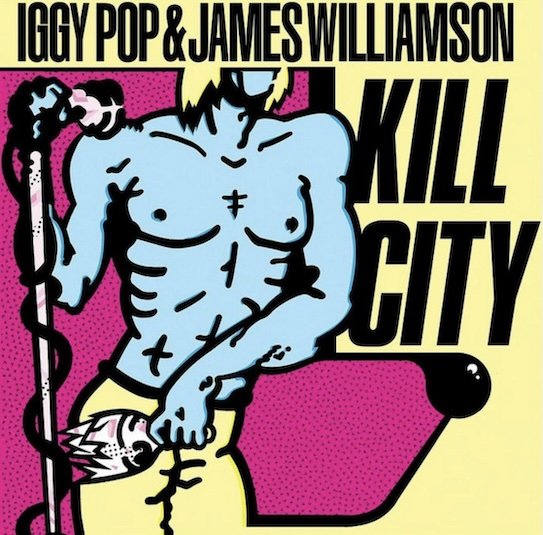
It’s not his best-known record. And it’s certainly far from being his best. Iggy had hit rock bottom when he made it, and drugs and despair are baked into the grooves. But for me it’s a massive memory trigger of a time and place…
George and Edna were a middle-aged couple who lived in an ordinary terraced house in a nondescript suburban street in Sutton, Surrey. Sometime in the 1960s George had painted ‘Harold Wilson has scabby balls’ in bold white letters under a railway arch at the end of the road. It was still there in the late 1970s. A legendary piece of local graffiti. As the first burst of punk faded, a flamboyant larger-than-life gang of misfits and drama queens used to hang out there most weekend nights, until the early hours. Most had dull day jobs (washing dishes, waiting tables) but in the high of those night-times could escape to the dream of being a famous fashion designer, or a rock star, or a novelist. My older brother was ever present, always with a pack or two of Sobranie cocktail cigarettes and a flask of vodka. I can still see him and Pete G, who ran a pet food stall in Sutton market by day, cavorting in tight pink leathers, jabbing index fingers towards each other and slurring along to ‘Sell your Love’. Balloon’s debut LP Gravity drew heavily from that period.
Marquee Moon
3.
Television
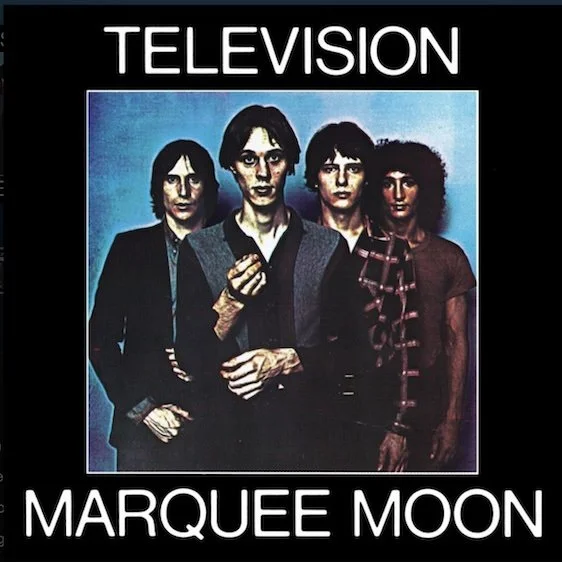
There have been a lot of great four-piece guitar band records, but Marquee Moon is so much more than that. It defined my view of what a band could be. Not just how it sounded, but how it looked. Television were effortlessly cool. David (Sheppard) was a huge fan. Even looked a lot like Tom Verlaine. But I can’t write songs like Television, so we had, at best, fleeting echoes, such as David’s guitar solo on ‘Frighten to Death’, from Gravity, and the instrumental riff on ‘There is Love’, off Gas ‘n’ Air, the inspiration for which was the guitar riff on ‘Guiding Light’.
I’m no fan of guitar solos, but Verlaine’s on the title track is surely the greatest ever. And no, I’m not taking questions, so you can put your hands down Hendrix fans. Chris, my best mate at school, had seen Television at London’s Hammersmith Odeon in May 1977. I passed up his invitation to go. Regretted it for years. Eventually I did see them, in a small club in Haarlem of all places, where I live, and not long before Verlaine died. It was thrilling to be within touching distance. It wasn’t even sold out; there were fewer than 500 people there. Incredible. And yes, they did play ‘Marquee Moon’.
Symphony No. 3
4.
Henryk Górecki
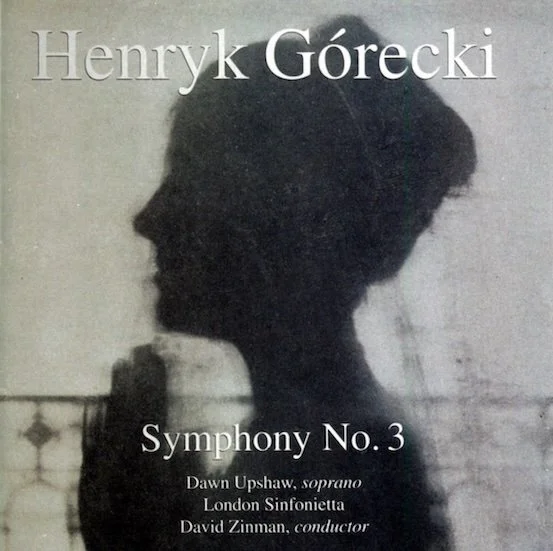
My mum was an opera singer, but I used to hate it when she sang. It was always at top volume, and generally in German. Only years later did the penny drop. Clearly, somewhere deep inside, something struck a chord. And that something was the human voice and its ability to express the inexpressible. I’m unimpressed by vocal trickery, and there’s a fine line between interpretation and showboating. Classical singers tend to stick to the script. And when that script is this good, why wouldn’t you?
My friend, the writer Michael Bracewell, bought me this record years ago. He said he thought I’d like it. He was right, and I’m still thanking him now. I favour the version with the brilliant American soprano Dawn Upshaw. I’ve since bought other versions, including with Beth Gibbons, which are great, but nothing touches this reading. The first movement is largely instrumental, a circular, repetitive string motif that rises then falls, but which only makes the arrival of the voice that much more powerful. The stunning purity and beauty of Upshaw’s voice at the melodic cadence gets me every time. Tears are never far behind. You don’t have to be a trained opera singer to achieve this (special mention to Mark Hollis), but boy does it help.
Astral Weeks
5.
Van Morrison
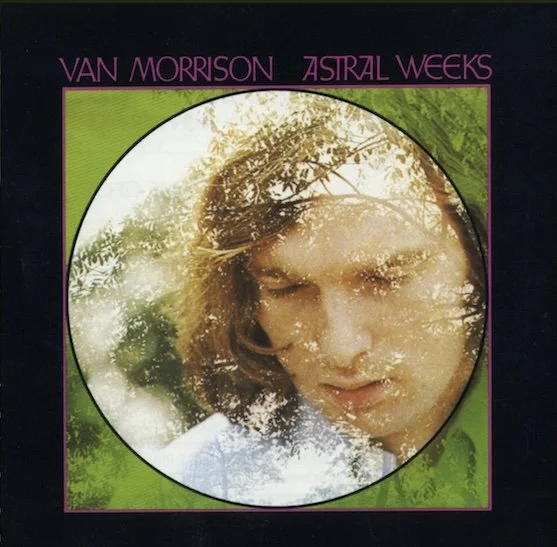
I’ve been listening to this record all my life and it never fails me. Whatever I’m doing at the time, I have to stop. There’s a place in my affections for Saint Dominic’s Preview, even bits of Veedon Fleece, but this stands alone as Van’s masterpiece. It’s head and shoulders above any LP he made thereafter, and indeed pretty well any record from the 1960s singer-songwriter genre, including by Dylan (I love Blonde on Blonde and John Wesley Harding, but they don’t move me the way this does).
The songs are not complex, mostly three or four chords, but it’s where Van takes them, and the empathy and sensitivity of a group of stellar jazz players that lifts it to another place where melody, sound, and feel truly fuse, and the whole transcends. Songs like ‘Sweet Thing’ have become standards. It helps that it’s only a couple of simple chords, which pretty well anyone can knock out. Blimey, even I can. But Van’s delivery, phrasing, and timing is peerless. Try singing along with the original. It’s simply not possible. I don’t believe you can set out to make a record as great as this. It must just happen; a magical mix of moment, mood, and musicianship, with maybe a touch of madness thrown in for good measure. For me, Astral Weeks is the benchmark. And, depressingly, I know I’ll never get even remotely close.
Remember
6.
Doll by Doll
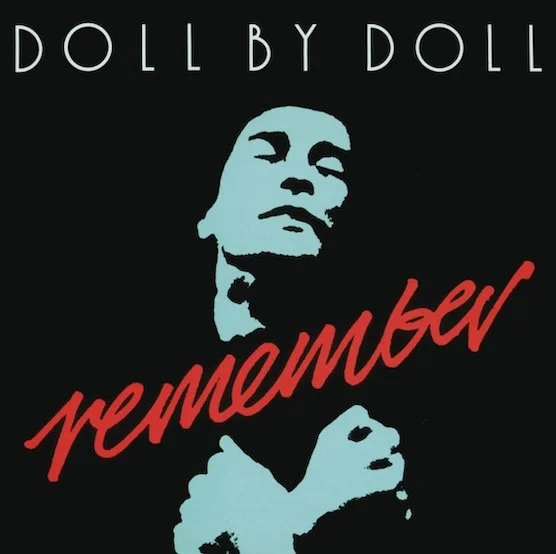
A record that opened my eyes to that fact that music could be made by people who didn’t fit the stereotype. The bloody-minded belligerence of Doll by Doll couldn’t hide a deep and profoundly moving humanity. Jackie Leven was one of the great soul singers. And this, Doll by Doll’s 1978 debut, is peak Leven.
It helps I think that I can visualise the band performing. There’s something about certain bands when they take the stage. You know something special is about to happen. Intense doesn’t even begin to cover it, and there was a fair bit of intensity around at that time: Joy Division, PiL, the Pop Group, even, occasionally, Echo and The Bunnymen.
Maybe it was the fact that Doll by Doll were unfashionable, (they were ‘adults’ pushing 30, when most bands were barely out of their teens, plus their R&B roots anchored them firmly in the world of pub rock), that only made their music that much more extraordinary. They weren’t remotely glamourous. But they were 100% real at a time when other bands were stereotypes of rock ‘n’ roll cool. They had a vicious, jagged twin guitar interplay that echoed Television and a voice that soared. Sure, they could veer uncomfortably close to the muscular dullness of pub rock, but always the songs detoured into more interesting and dangerous territory. If you don’t believe me, listen to ‘Butcher Boy’ or ‘The Palace of Love’. True soul music.
Searching for the Young Soul Rebels
7.
Dexys Midnight Runners
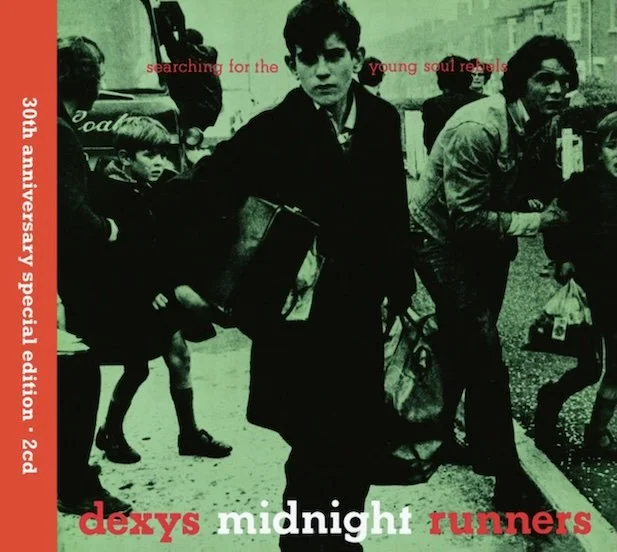
For me, when Dexys came on the scene, there had been nothing like them since The Clash. And back then, hard as it is to imagine now, for the kids in my gang The Clash were ancient history. I’d always loved Motown and Stax, and Dexys were traditional in many ways (the brass section, for one) but also entirely new, especially when it came to lyrics. They were a gang, and I knew right away that I wanted to be part of it. I joined their fan club, named, in typically overblown yet unapologetic style, the Intense Emotion Circle.
Sure, the look was totally contrived (woolly hats, donkey jackets) and a great deal of thought and practice had gone into the staging, but that was true of all the greats: Bowie, Elvis, James Brown. Thing was, that approach was out of place back then when bands typically shambled onto the stage, mumbled a few words, and gloomily riffed away. The new romantics – Spandau, Duran – were dressing up, but that was a style thing and they were pop groups. Dexys Midnight Runners were different. They were a call to arms. Rowland was out there, stage front, asking where the young rebels were, and I was somewhere in the back of the stalls, gazing up awestruck and silently mouthing: ‘I’m here, Kevin. I’m here’.
© 2026 State of Sound. All Rights Reserved
RELATED
THE ‘ONE TO WATCH’ INTERVIEW
25 October 2025

ALBUM OF THE MONTH
Words: David Rea
4 October 2025