THE STATE OF SOUND INTERVIEW
When Liam told Noel, ‘Mate, you're as good as the Beatles now!’
Legendary music writer Paolo Hewitt on the madness of touring with Oasis in 1997, Liam's reaction to one of Noel Gallagher's best songs and why the working classes have always had the best taste.
14 February 2026
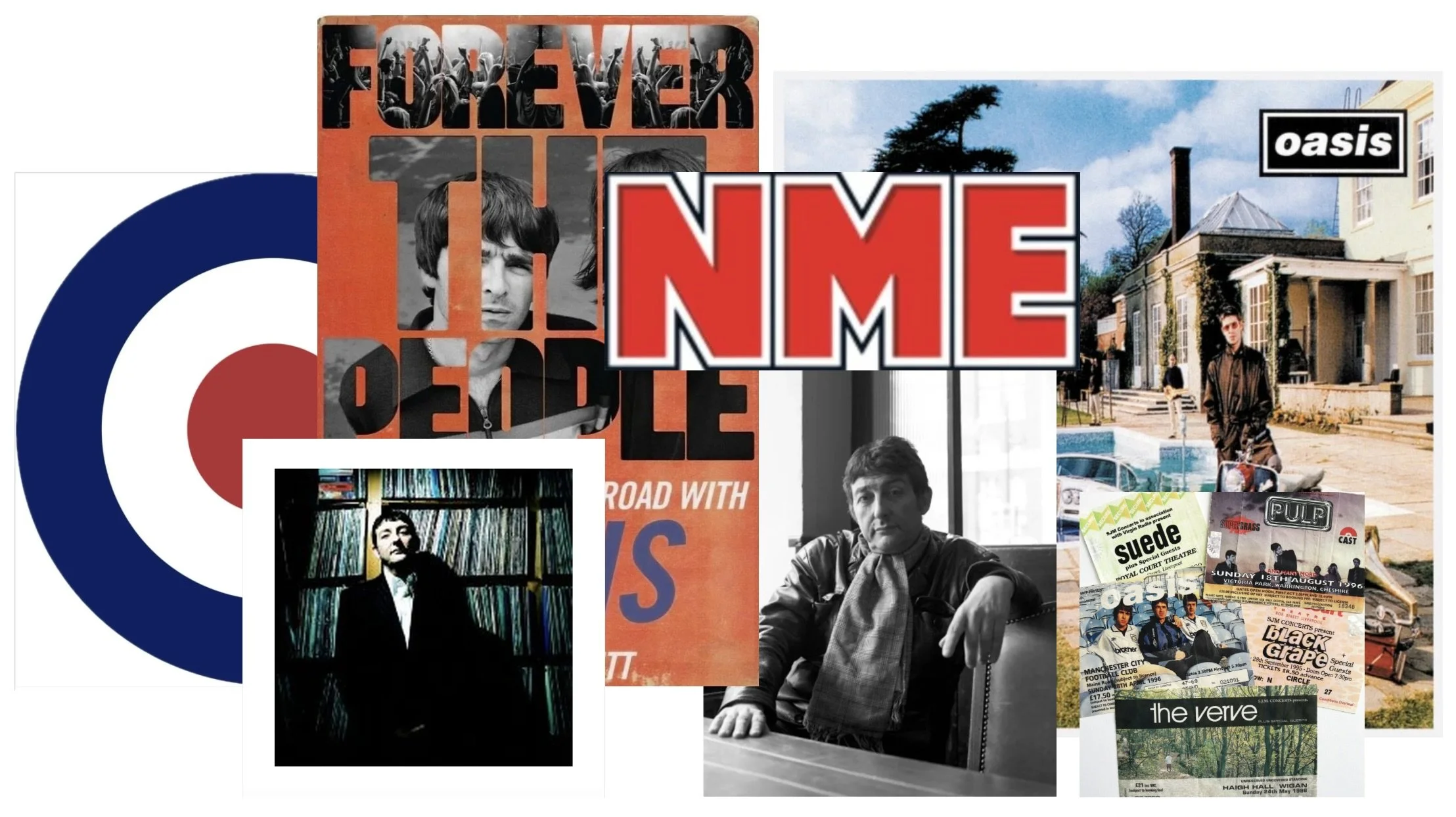
State of Sound: You went on the road with Oasis for six months in 1997, on the Be Here Now Tour, an experience you describe in Forever the People: Six Months on the Road with Oasis. At the start, you’re at the airport with Noel Gallagher and he says: ‘Did you call me in the middle of the night last night?’ and you say, “‘Probably not, but I could well have done.’ The night before, I had got lost in myself.” Including yourself in the story in this way reminded me of the gonzo journalism of people like Lester Bangs.
Paulo Hewitt: I was very influenced by gonzo journalism. I really like Truman Capote, I love Tom Wolfe, all that new journalism stuff, where you put yourself in it. The idea is that you try and write it as fiction.
In Forever the People, you talk about the psychology of going on tour with a band: “On tour, the only place in the world where one minute you want to tell someone your darkest secret and the next day you want to badly hurt them with tongue, with fists, where room numbers are a blur.”
Well, going on tour is a very... you enter into a bubble. It's like the title of the Paul Weller book about touring, Days Lose Their Names and Time Slips Away. That's what happens. Your life gets reduced to: go to a gig, get the gig done, go to the hotel, get up and do it again. You're protected from the outside world. The only important thing is the gig. It took me three months to get over that Oasis tour.
To get back to normal?
Yeah, just to feel connected. I didn't feel connected to anything when I got back. Everything seemed weird, you know.
One of the things I like most about Forever the People is all these little portraits and scenes you paint. I feel like I got to know Oasis and Liam and Noel really well. There's one example where Liam really wants to hear the first full playback of Be Here Now and Noel's delaying it and they're bickering. And then the album comes on and they stand side by side. Noel puts his arm around Liam and they start sort of dancing joyfully because it sounds incredible. And I got such a sense of their relationship from that: they really needle each other, but they have this incredible connection through the music.
Yeah. It was exactly like that one time at a studio in Fulham. Liam and Noel were bickering away about vocals or something. You know, Liam’s going, ‘Fucking vocals aren't high enough’. And then they go in the studio and Noel plays ‘The Masterplan’, which is my favourite Oasis song, by the way. And everything just stops and Liam's like, ‘What is this?’ And at the end, Liam just goes, ‘Mate, you're as good as the fucking Beatles now’.
That's a lovely compliment coming from Liam, particularly as Noel did the vocal on that song.
Yeah, and you're right, there is bickering, and then the music comes on and everything's okay. After they reformed, this American journalist said to me, ‘What do you think of their solo careers?' and I said, ‘Well, I didn't really follow them because I’d lost interest by then’. I said, ‘What did you think?’ He said, ‘Well, it just proved to me, Noel needs Liam and Liam needs Noel’.
“When I met Oasis in 1994, everything was funny, everything was a laugh. I’d go around Noel’s house and it was like: let's go, and I'd wake up two days later somewhere.”
What memories from the Be Here Now Tour have stayed with you?
It was horrible. I didn't like it. Yeah, because all the fun had gone out of it. When I met them in 1994, everything was funny, everything was a laugh. I’d go around Noel’s house, and it was like: let's go, you know, and I'd wake up two days later somewhere.
And Be Here Now, it sold what, 500,000 copies on the first day? And then suddenly it's all big business and it's arenas and it's 54 people on the road, you know. It just wasn't fun anymore. And they became like rock stars; they hadn't been rock stars before, but now they've got bodyguards. They're all travelling in separate cars. I didn't like it at all.
You were invited on that tour by Noel as a DJ, and you make a comment in the book about that being a helpful guise. If your official role is a DJ, you can be more of a fly on the wall, but if you're there as a journalist, you walk into the room and everybody shuts up.
Yeah, absolutely right!
You've written about Steve Marriott, Paul Weller, Oasis and others — you have a real interest in working-class culture. Can you talk a little bit about that?
I think coming from a children's home, I'm always in favour of the underdog. And also, all my favourite bands were working-class. A lot of my favourite writers or people were working-class. Someone asked me the other day about comedy. They asked, ‘Who’s your favourite comedian?’ And I said, ‘Football fans. Football fans are the funniest’. Do you know what I mean? The working classes produce the best clothes, the best music, the best this, the best that, you know. I find it fascinating.
Yeah, until Thatcher came in, Britain was a socialist country. There was a mixed economy, unions were quite strong. Unemployment benefit was an art subsidy. And there was a squatting culture. And there were a lot of working-class people in the arts and there was tonnes of amazing talent in music. Ray Davies right through to Paul Weller and beyond. And I suppose that era is now gone. The way Britain was during that time allowed a lot of working-class voices to come into music in a way they haven't done since.
Yeah, Kevin Rowland from Dexys Midnight Runners talks about this, the fact that without the dole, Dexys couldn't have existed. They lived off the dole for a year. Working-class kids could go to art college. But those structures aren't in place anymore, and that's why you have working-class actors moaning that they can't get a break because it's all middle- and upper-class. They're the ones who've got money, who can go to college and take on loans and debts.
Yeah. People say the old government-subsidised art school was a bit of a dosser's paradise. You could get away with not doing very much, but that is precisely the creative space these people needed.
Yeah, and it produced Pete Townshend and Ray Davies and John Lennon. This guy was telling me that when Townshend was at art college, all he wanted to do was sit around playing John Lee Hooker records.
I think David Bowie made a joke about it, something like: ‘We used to go to art school to learn to play blues guitar.’
Yeah!
© 2026 State of Sound. All Rights Reserved
RELATED

HOW THEY WROTE THE SONG
by David Rea
31 January 2026